Species information
Scientific name: Polypedates leucomystax
Japanese name: シロアゴガエル
Chinese name: 白頷樹蛙
English name: White-lipped Tree Frog
Origin: Widely distributed from northeastern India to the Philippines, throughout Southeast Asia
Ecology and description
This species has been confirmed on most islands of the Okinawa Islands, as well as on Kita-Daito, the Sakishima Islands (including Miyakojima and Ishigaki), and Yoronjima in Kagoshima Prefecture. It is most commonly found on Okinawajima and Miyakojima. There was once a population on Iriomote, but it was declared completely removed by 2019.
White-lipped Tree Frog was first discovered on Okinawajima in 1964, and it was recorded on Miyakojima for the first time in 1997. Since Okinawa was under US administration between 1945 and 1972, it is speculated that individuals were inadvertently transported with military supplies or they escaped from captivity, subsequently spreading to many islands.
※ Designated as a “Specific Alien Species” under the Invasive Alien Species Act in Japan
※ Listed among “Japan’s 100 Worst Invasive Alien Species”
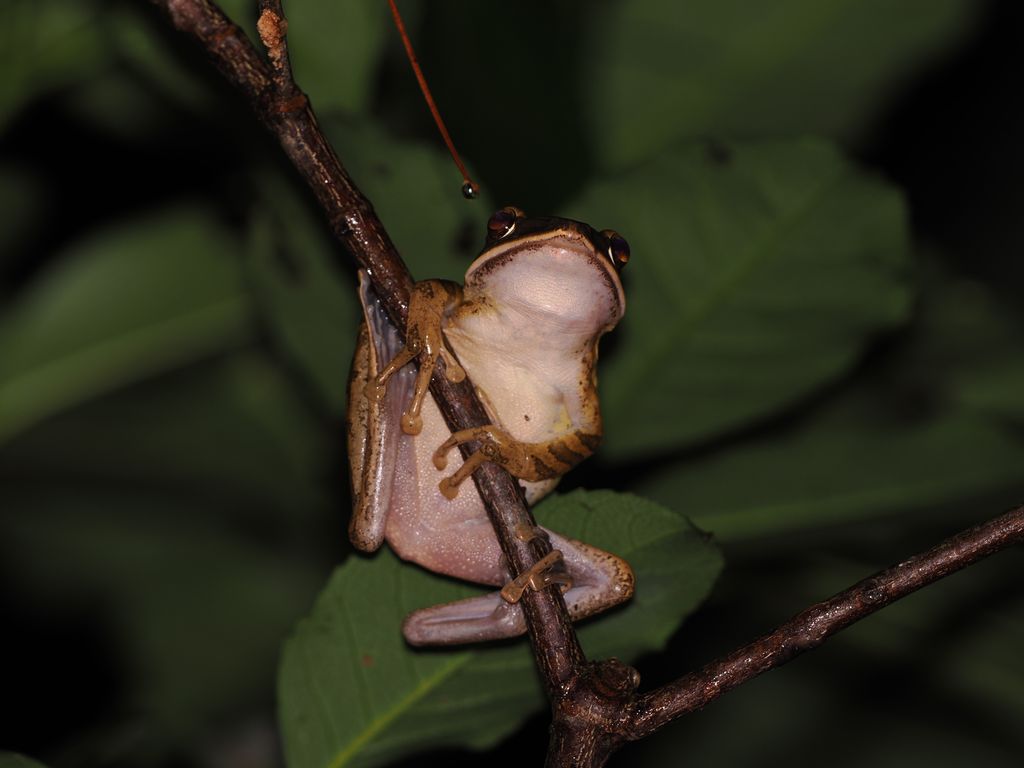
Taiwan also has two related tree frogs, the non-native Polypedates megacephalus and the native P. braueri. Due to early identification confusion, these two species were sometimes also mistakenly referred to as White-lipped Tree Frog. However, from a scientific perspective, “White-lipped Tree Frog” specifically refers to Polypedates leucomystax. The species name leucomystax comes from the Greek leuco- (white) and mystax (upper lip), reflecting its distinctive white lip characteristics.
Reference: National Institute for Environmental Studies Invasive Species Database
https://www.nies.go.jp/biodiversity/invasive/DB/detail/40030.html
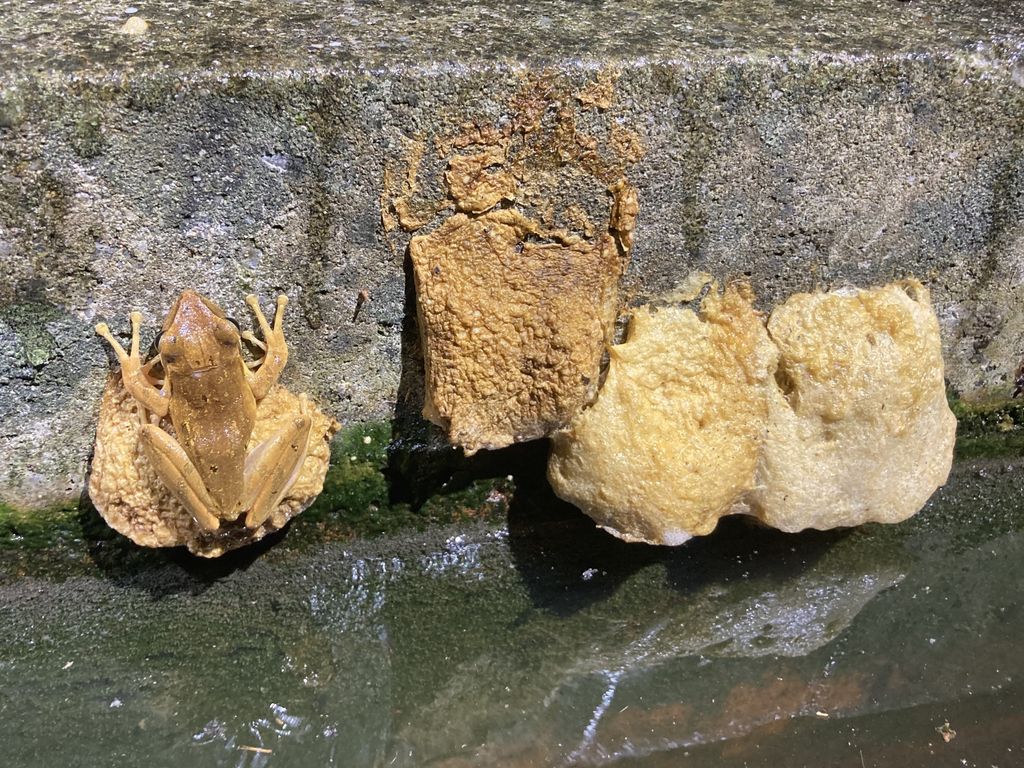
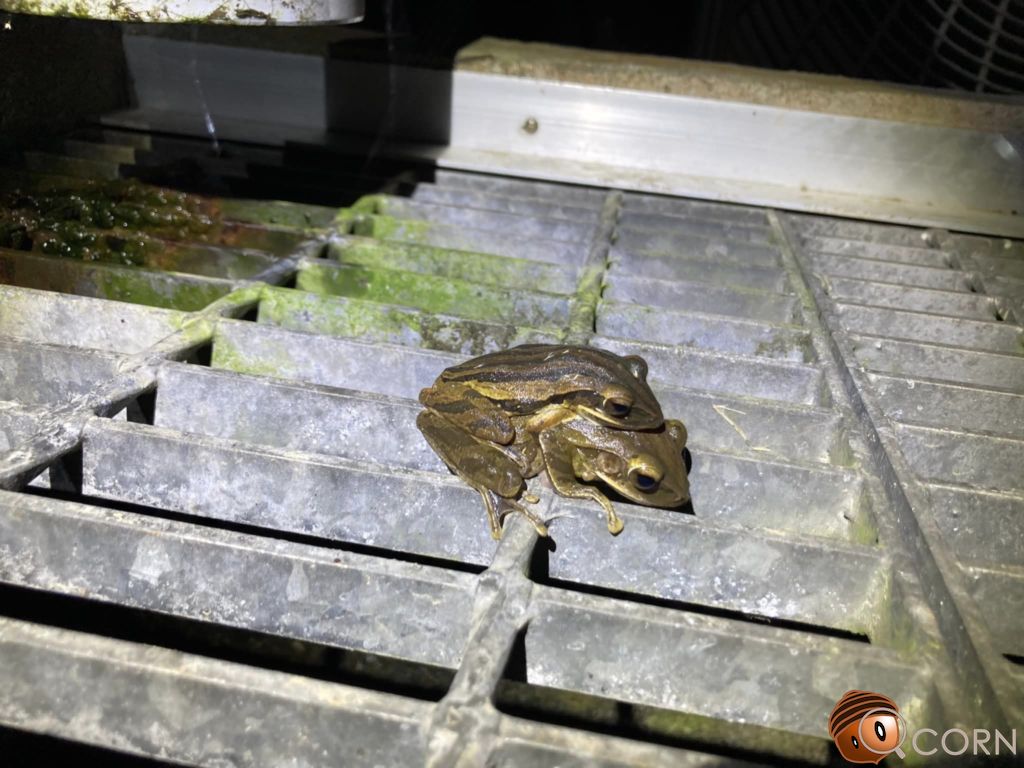
Field photographs taken during our tours, with observation dates
During our 【Herping】 tour from May to October, adults and egg clutches can be seen near ponds during the breeding season in summer.