Species information
Scientific name: Alpinia zerumbet
Japanese name: ゲットウ
Chinese name: 月桃
English name: Shell ginger
Origin: Tropical to subtropical regions of Asia, including Southeast Asia, southern India, Taiwan, and the Ryukyu Islands of Japan.
Ecology and description
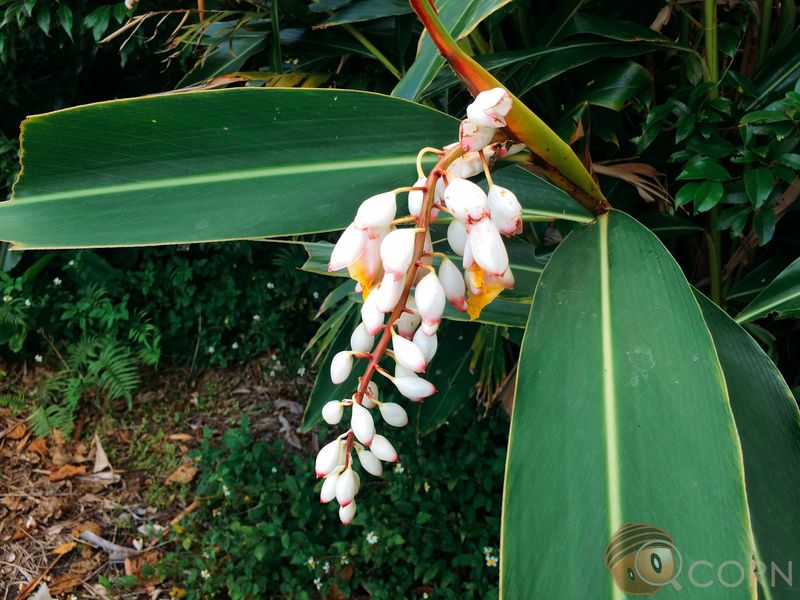
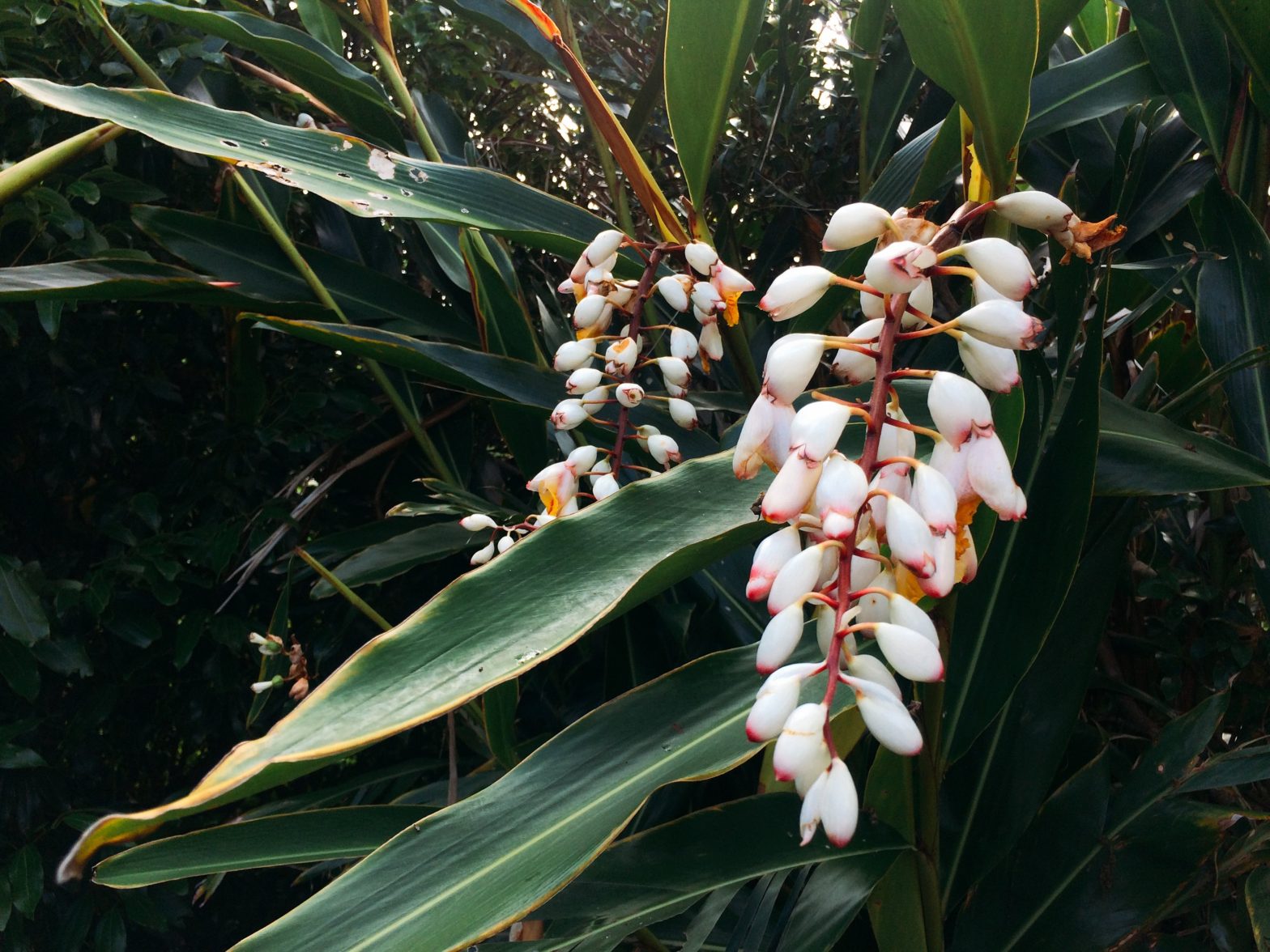
Shell ginger is a very common plant in Okinawa, often planted by the fields as a windbreak hedge. The leaves of Shell ginger are rich in essential oils and have antiseptic and preservative effects. Additionally, in recent years, products like Shell ginger leaf tea and cosmetics and soaps made using Shell ginger essential oils have become closely related to the daily lives of the people of Okinawa. The flowers of Shell ginger bloom during the rainy season in May and June, appearing pink and delicately charming; the flower buds resemble shells before blooming, hence the English name “Shell ginger.”
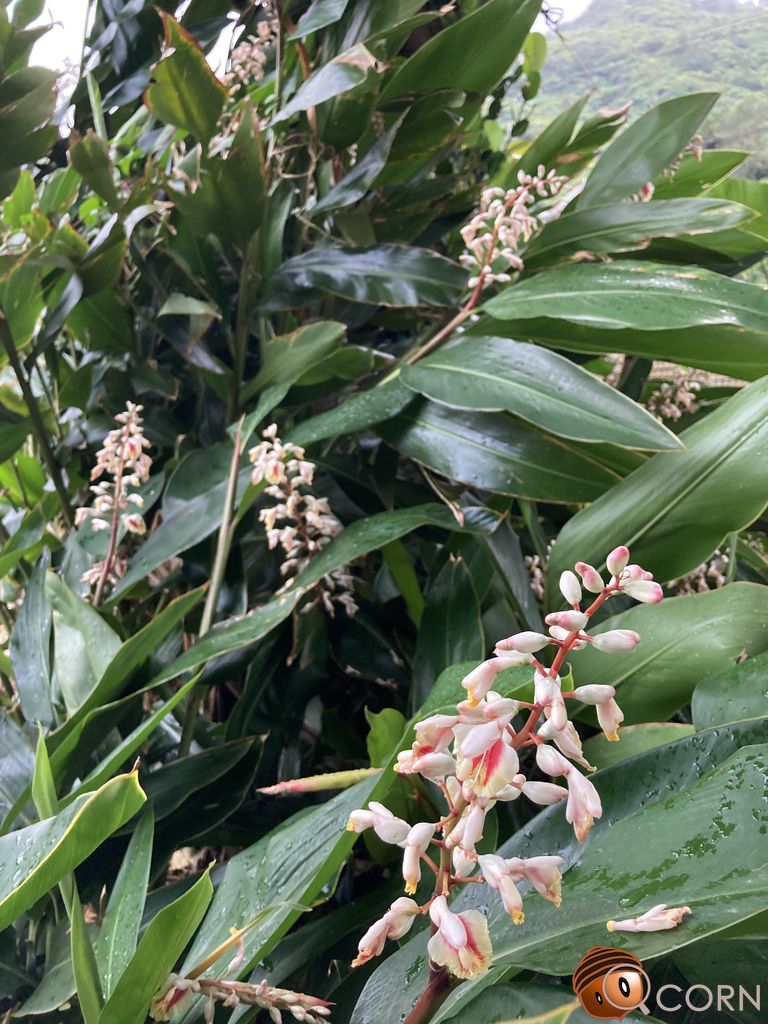
Shell ginger (Alpinia zerumbet) easily hybridizes with the native Okinawan species, Alpinia intermedia. The naturally hybridized species is the Taiwanese Shell ginger (Alpinia ×formosana). As Shell ginger is widely planted in Okinawa, the Taiwanese Shell ginger can also be commonly found in rural areas of Okinawa.
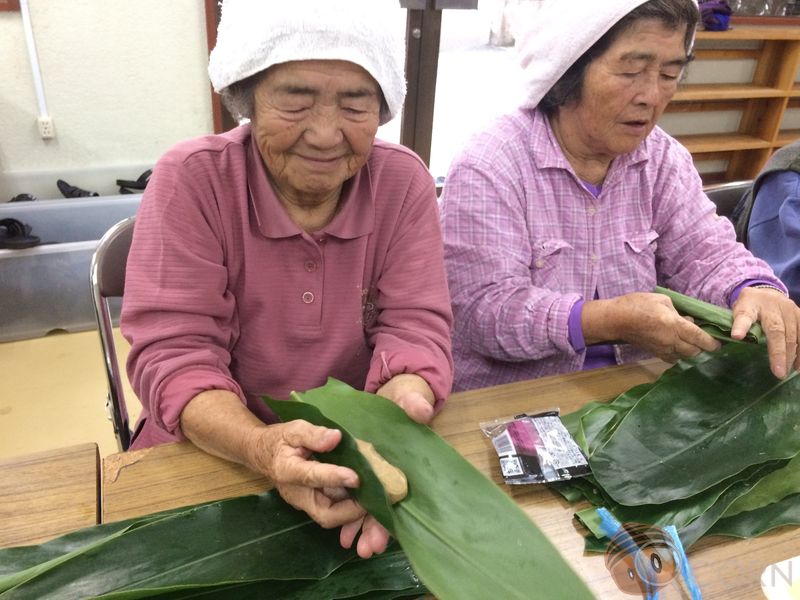
The flowers of the Taiwanese Shell ginger are larger than those of Alpinia intermedia but smaller than those of Shell ginger, with an upright inflorescence like Alpinia intermedia rather than drooping as in Shell ginger. The softness of the leaves is also between the two, making it suitable for producing Okinawa’s traditional mochi “muchi.”
Field photographs taken during our tours, with observation dates
The best season to appreciate the blooms of Shell ginger is from May to June. In Okinawa, many Shell ginger are cultivated, making them relatively easy to find near some villages and field roads.