Species information
Scientific name: Birgus latro
Japanese name: ヤシガニ
Chinese name: 椰子蟹
English name: Coconut crab
Origin: Tropical islands along the coasts of the Indian Ocean and Western Pacific (with some islands where they have become extinct). In Japan, they are distributed from the Amami Islands to the westernmost Yonaguni.
Ecology and description
Coconut crab belongs to the family of terrestrial hermit crabs. Young Coconut crab carry shells like hermit crabs, abandoning these around the age of 2, folding their tails to protect their soft abdomens. Coconut crab grow slowly, with males requiring at least 5 years to reach sexual maturity.
You can refer to records of Coconut crab of different ages in the wild in the article by the Taiwan Environmental Information Center:
Conservation status: First complete record of Coconut crab family found on Green Island, Taiwan
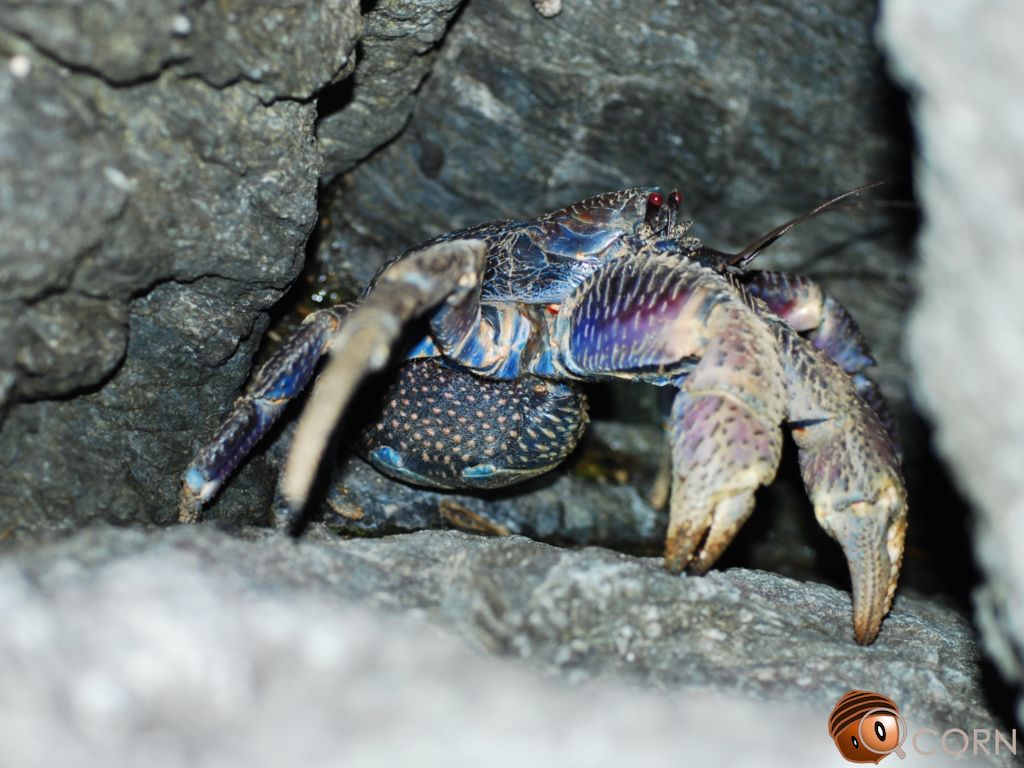
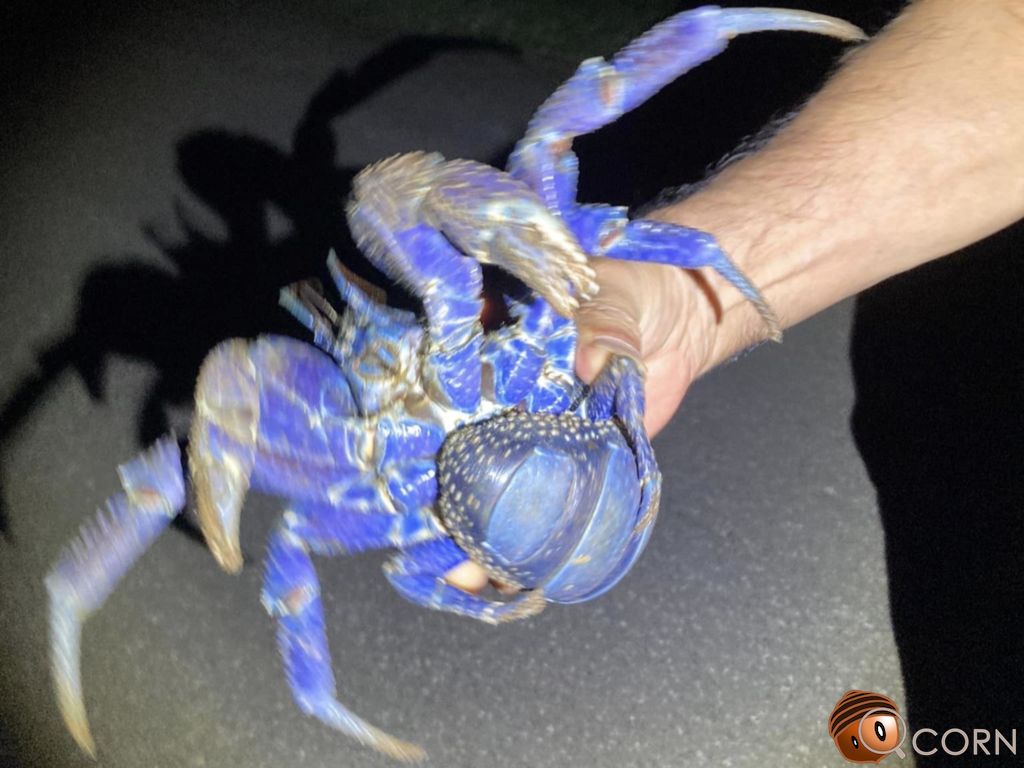
Field photographs taken during our tours, with observation dates
In Kunigami, there are opportunities to see Coconut crab, but generally, they can’t be found at our usual night tour spots. They can be found at specific locations. Additionally, opportunities to observe Coconut crab on Ishigaki and Iriomote are higher than on Okinawajima.
Conservation of Coconut crab
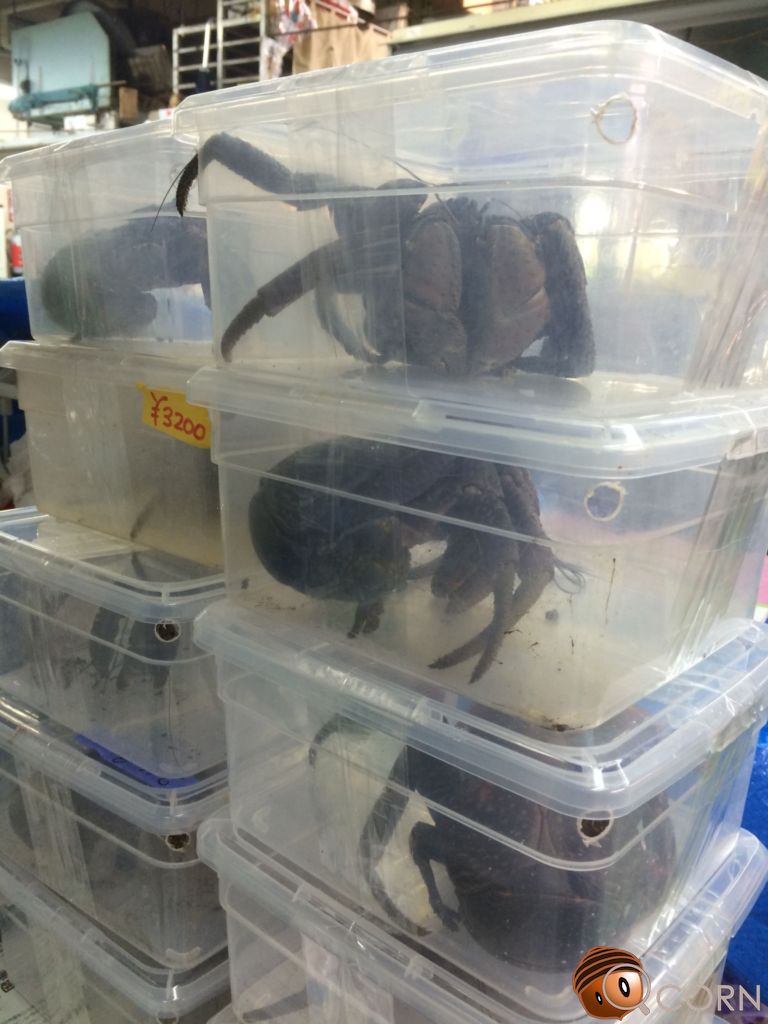
Years ago, I saw Coconut crab being sold in plastic boxes at the old Makishi Public Market. Coconut crab grow slowly and can live for about 50 years. The Coconut crab in those boxes might even be older than us.
I personally hope that visitors to Okinawa refrain from eating Coconut crab to reduce harm to the wild populations. Currently, many izakayas on Ishigaki offer Coconut crab dishes, and the local Coconut crab have been catching smaller and smaller, with some hunters stealing them from other islands.
Some administrative units in Okinawa have designated protection areas and seasons for Coconut crab:
- Miyakojima: Coconut crab protected year-round in designated areas, prohibited from June 1 to August 31 in other areas (Reference)
- Kudakajima: Prohibition on any capture or harm to Coconut crab (Reference)
- Ishigaki: Part of the northern coast designated as Coconut crab protection zone (Reference)
- Yonaguni: Prohibition on capture during certain seasons (Reference)
However, I personally feel that apart from Kudakajima, where capturing Coconut crab is completely prohibited year-round and in all areas, other regulations only apply to certain areas or seasons. For the slow-growing Coconut crab, without a total ban, restaurants or hunters can always claim to have captured them outside protected seasons or areas, which may not be very effective for their conservation.
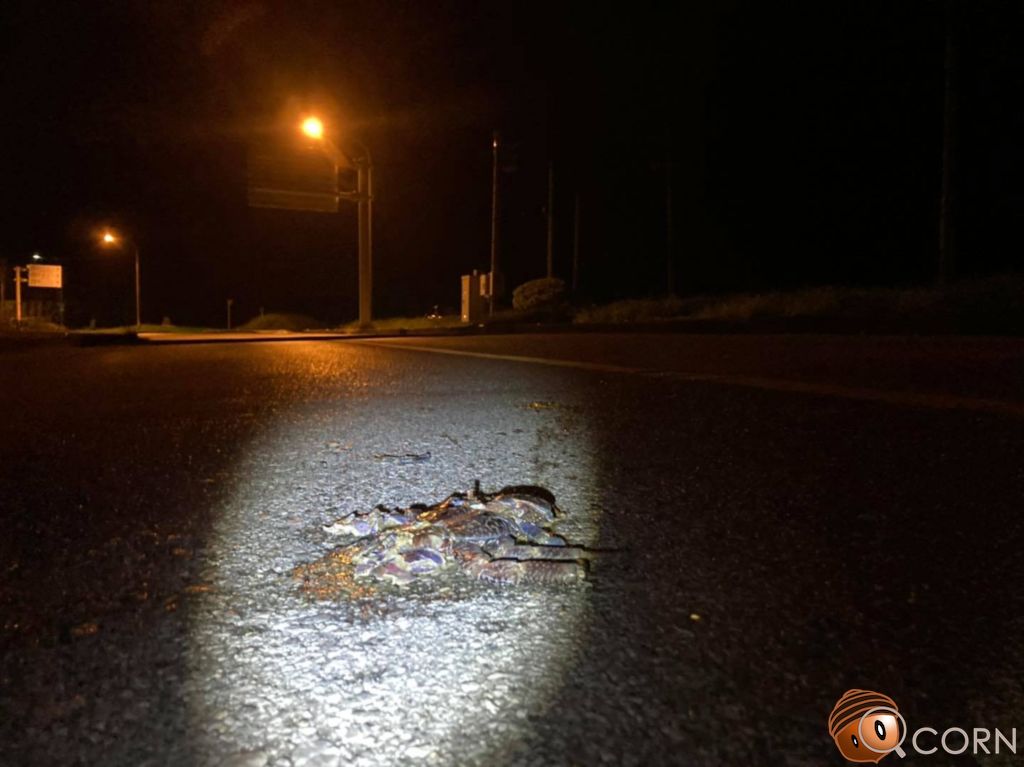
Roadkills are another cause of decreasing Coconut crab numbers, particularly on roads near the coast at night during summer. I hope drivers will slow down.