Species information
Scientific name: Parus cinereus okinawae
Japanese name: オキナワシジュウカラ
Chinese name: 白頰山雀(沖繩亞種)、遠東山雀(沖繩亞種)
English name: Asian tit (Okinawa subspecies)
Origin: Okinawajima, Yagajijima, Zamamijima
Ecology and description
The Okinawa subspecies of the Asian tit (Parus cinereus okinawae) is found on Okinawajima, Yagajijima and Zamamijima. Other subspecies occur elsewhere in Japan: the nominate subspecies P. c. minor on mainland Japan, P. c. amamiensis in the Amami Islands, and P. c. nigriloris in the Yaeyama Islands (Ishigaki and Iriomote). The species as a whole ranges from Japan across the Korean Peninsula and China to the Russian Far East.
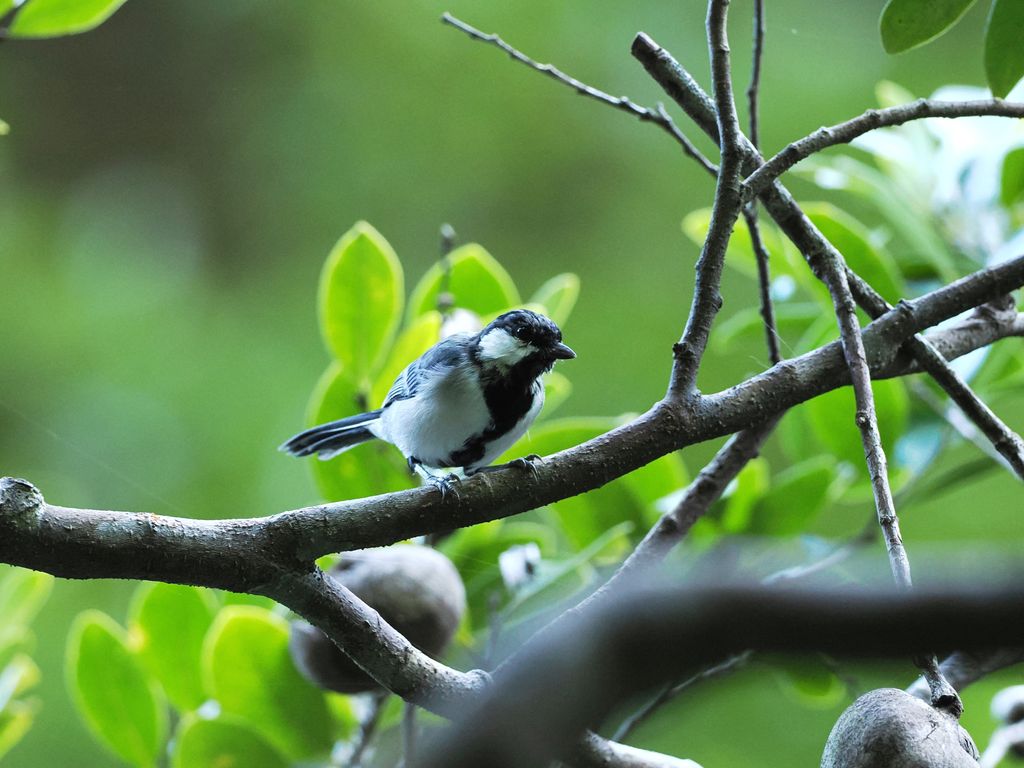
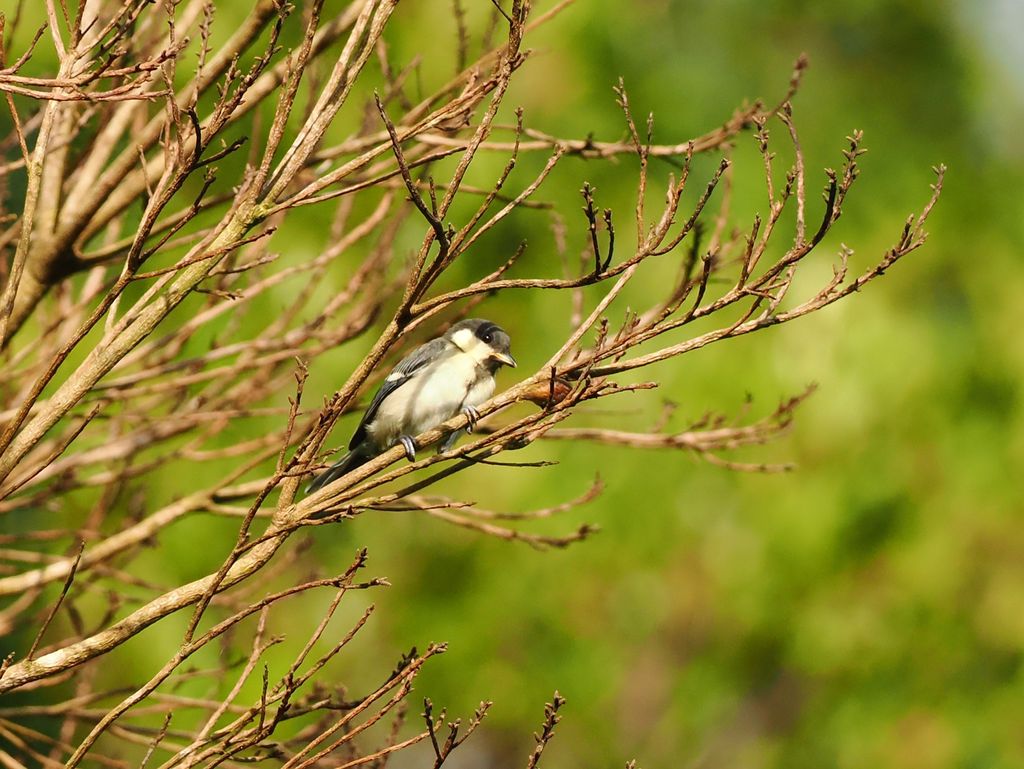
This species is about the size of a sparrow. It has a black crown, white patches on the cheeks and nape, and a black stripe running from the throat through the chest to the belly. The stripe is thicker in males than in females.
It is omnivorous, feeding on insects, spiders, fruits and seeds, and forages both in trees and on the ground. It is basically non-migratory, and in winter it often joins mixed flocks with other small birds. It nests in tree cavities, old woodpecker holes, nest boxes or gaps in buildings, and the female builds a cup-shaped nest of moss. On mainland Japan, the breeding season is from April to July, and a clutch is about 7 to 10 eggs. Its calls are high-pitched and varied, and research has found that it changes the combination of its alarm calls depending on the type of predator.
Reference: Japanese Wikipedia: シジュウカラ
Field photographs taken during our tours, with observation dates
During our 【Morning Birding】 tours, we sometimes have opportunities to see this species, often moving together with warbling white-eyes.