Species information
Scientific name: Herpestes auropunctatus
Japanese name: マングース、フイリマングース
Chinese name: 紅頰獴
English name: Small Indian mongoose
Origin: Northern South Asia
Ecology and description
In 1910, Okinawa introduced the non-native Small Indian mongoose to control Habu snakes and rats. The Small Indian mongoose spread rapidly and expanded its territory, posing a significant threat to Okinawa rail as it reached northern Okinawa. Even after 100 years, the Japanese government still spends a huge budget annually to remove Small Indian mongoose (Note 1).
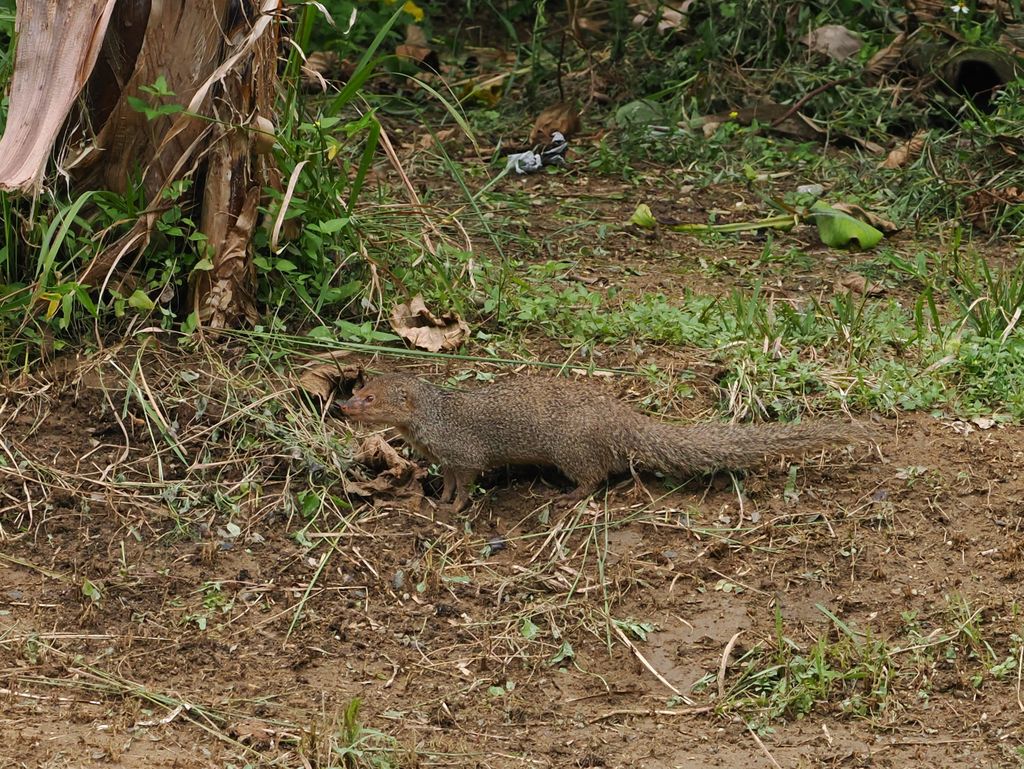
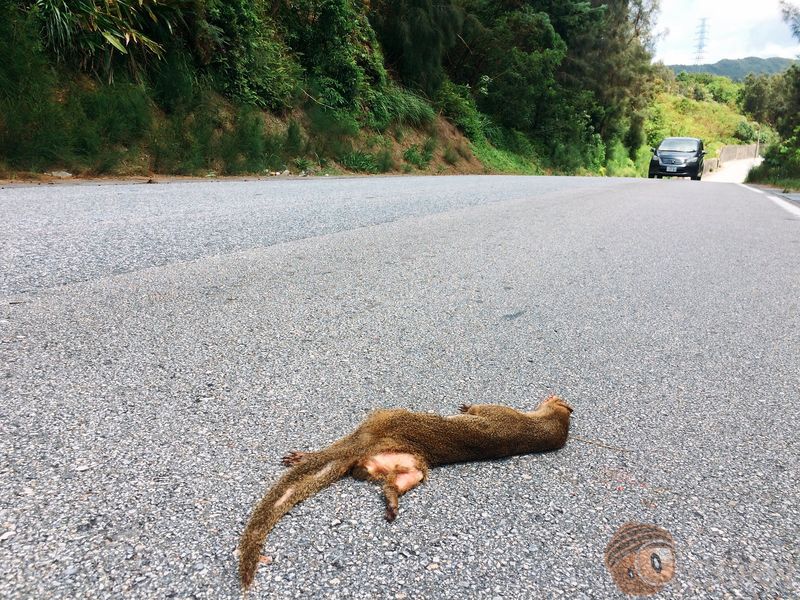
Field photographs taken during our tours, with observation dates
In areas south of the “Small Indian mongoose Northern Barrier” in Okinawa, you can see Small Indian mongoose, especially near rivers.
History of Introducing Small Indian mongoose
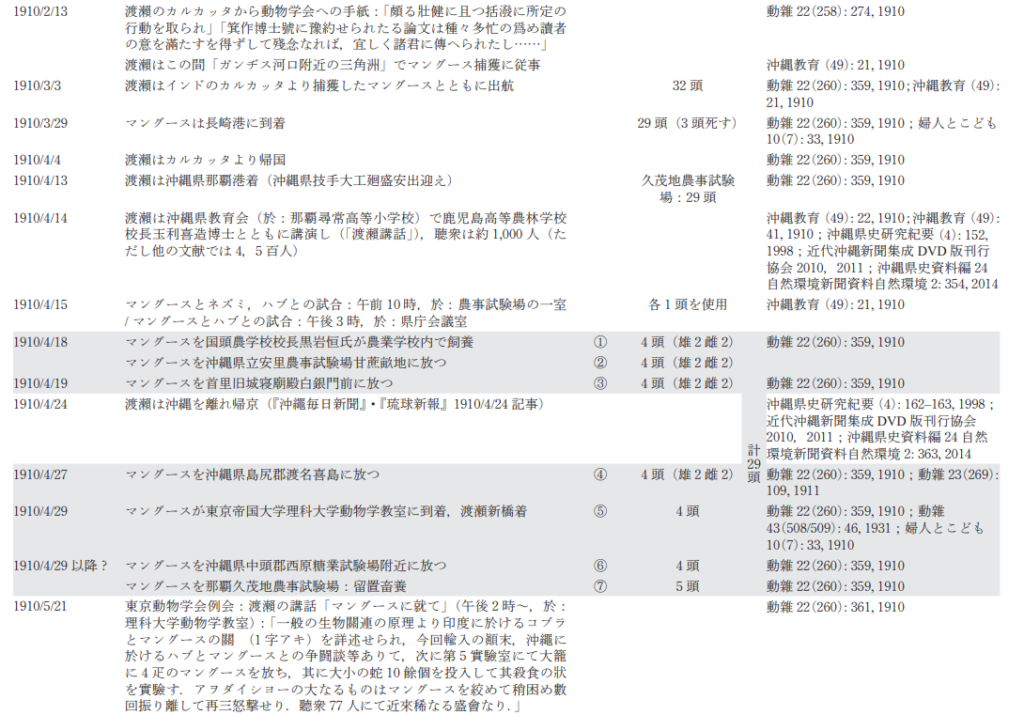
The following description is mainly referenced from
Kaneko Toshifumi (2021) Historical Review of Literature Related to the Introduction of Small Indian Mongooses to Okinawajima by Watase Shouzaburou Around 1910
In fact, it was Watase Shouzaburou (1862–1929) who introduced Small Indian mongoose. At the time, the economy of Okinawa depended on sugarcane cultivation, which attracted many wild rats. Habu snakes entered the sugarcane fields to prey on these rats, causing numerous snakebite incidents. Watase believed that introducing Small Indian mongoose could simultaneously control the populations of wild rats and Habu snakes.
Before Watase introduced Small Indian mongoose, another scholar, Nakagawa Hisatomo (1859-1921), had translated an 1898 U.S. Department of Agriculture yearbook about the ecological disaster caused after the introduction of Small Indian mongoose to Jamaica, which he published in the ‘Journal of Zoology.’
Whether Watase read this report or why he underestimated the risks of introducing non-native species can only be speculated through his writings and contemporary reports. However, it is presumed that he held an optimistic view of the introduction of Small Indian mongoose, leading to the introduction of 29 Small Indian mongoose to Okinawajima and Tonakijima in April 1910 (Note 2).
According to a 2016 article by Koichi Goka, Watase Shouzaburou was a professor at the University of Tokyo and a leading authority in zoology and biogeography. Why did he decide to introduce non-native species? At the time, Japan was at the end of the Edo period, in an era pursuing a strong and prosperous nation. Dr. Watase also actively introduced bullfrogs and American crawfish for food purposes. Perhaps the scholars at the time underestimated the risks of non-native species, and they eagerly introduced anything they deemed beneficial to Japan.
Note 1: Based on reference materials related to bidding expenses by the Ministry of the Environment for the removal of non-native species
https://www.gyoukaku.go.jp/review/fusyo/shisaku/sheet/121_kankyo_0907.xlsx
The total budget for controlling non-native species in the fiscal year 2022 was approximately 540 million yen, with about 330 million yen allocated specifically for controlling Small Indian mongoose. Additional funds of approximately 140 million were provided to Amami Oshima and 130 million to Yambaru for Small Indian mongoose control projects.
Other reference materials:
Specific Non-native Species Eradication Project Annual Budget 2020
Specific Non-native Species Eradication Project Annual Budget 2015–2019
Note 2: Four Small Indian mongoose were released on Tonakijima on April 27, 1910, but no sightings have been reported, indicating they may be extinct.
Measures to Control Small Indian mongoose
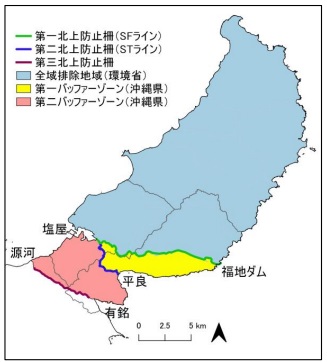
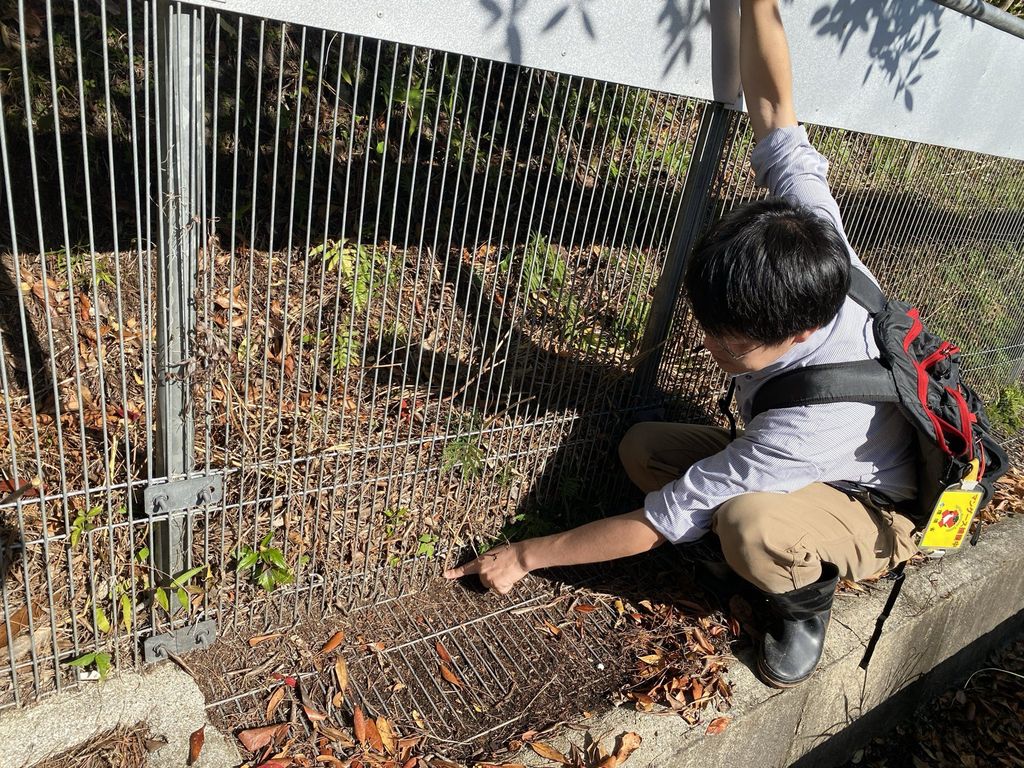
The government has installed Mongoose Northern Barrier fences from Shioya Bay to Fukuchi Dam and further south. There are three such barriers—Barrier 1, Barrier 2, and Barrier 3—to prevent rapid spreading of Small Indian mongoose into key protected areas and to enable trapping within fenced areas. These fences are specifically designed for Small Indian mongoose:
- The height prevents Small Indian mongoose from jumping over
- No horizontal bars allow Small Indian mongoose to struggle to climb over
- The top is made of metal plates to prevent Small Indian mongoose from grasping the edge to climb over
- There is fencing buried underground to prevent Small Indian mongoose from digging underneath
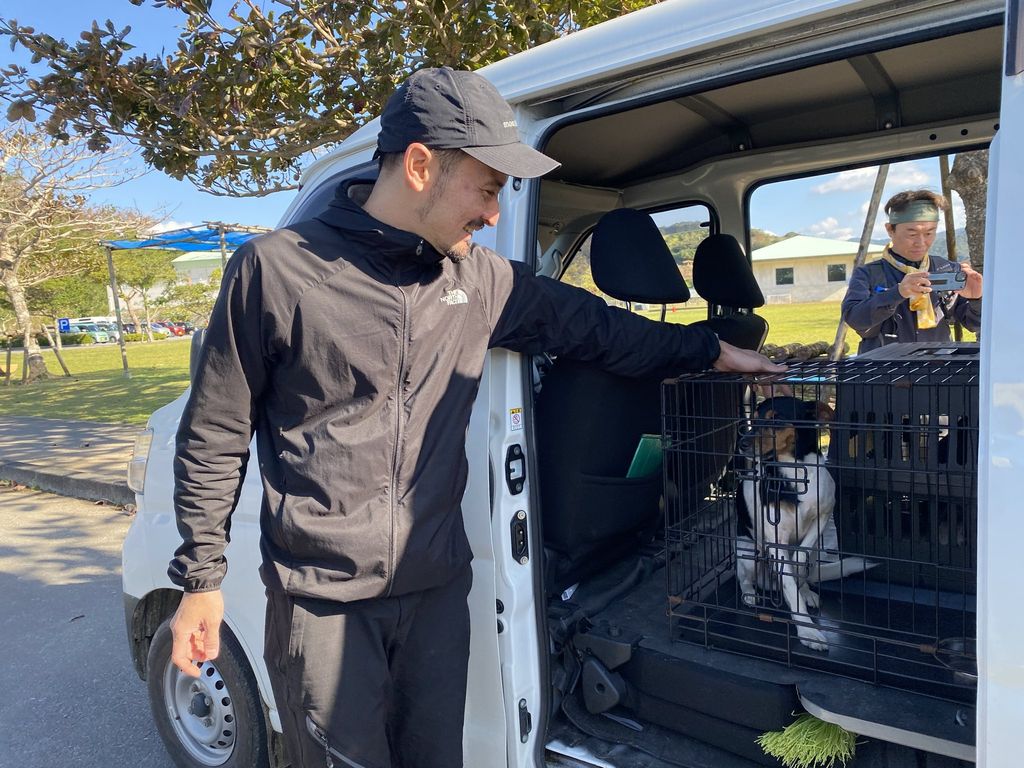
Mongoose Busters is an organization in Okinawa Prefecture composed of hunters and hunting dogs. They patrol forest roads and signal traps to be set if the dogs sense the scent or droppings of Small Indian mongoose. In actual sightings of Small Indian mongoose, some trained small hunting dogs directly pursue Small Indian mongoose.
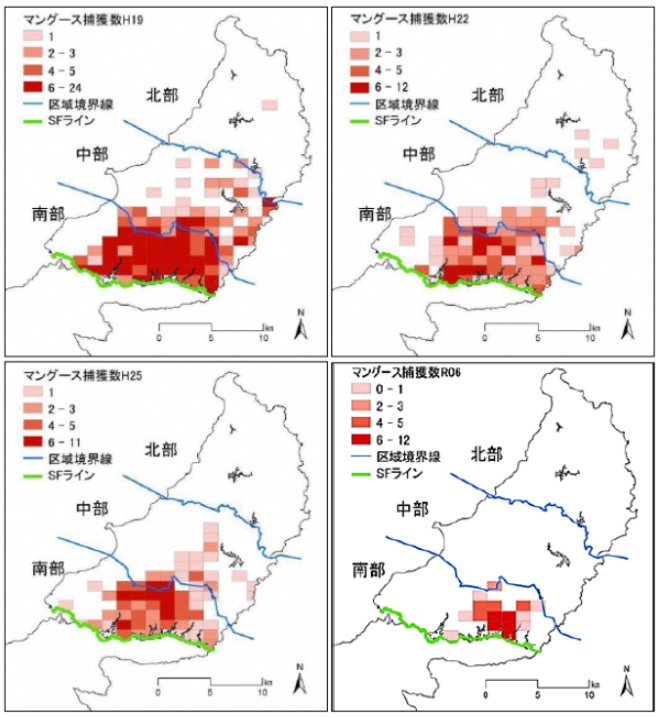
Thanks to the efforts of the Mongoose Busters, data released in 2026 (Note 3) shows a decrease in the number of Small Indian mongoose caught in traps. Meanwhile, the range of rare species such as Okinawa rail has expanded. Okinawa rail activities have been consistently recorded for two years in the Minami River area of Nago (the southern tip of the Mongoose Northern Barrier 3). The number of Okinawa rail has also recovered from an estimated 720 individuals (2005) to about 1,700 individuals (2021) (Note 4).
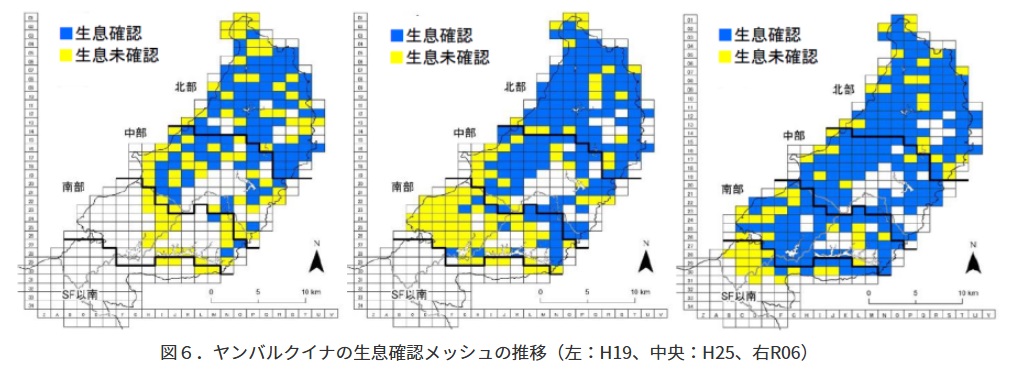
Note 4: First Confirmation of Okinawa rail in Nago City (Ministry of the Environment Press Release)