Species information
Scientific name: Cynops ensicauda
Japanese name: シリケンイモリ
Chinese name: 劍尾蠑螈
English name: Sword-tail newt
Origin: Okinawa Islands, Amami Islands
Ecology and description
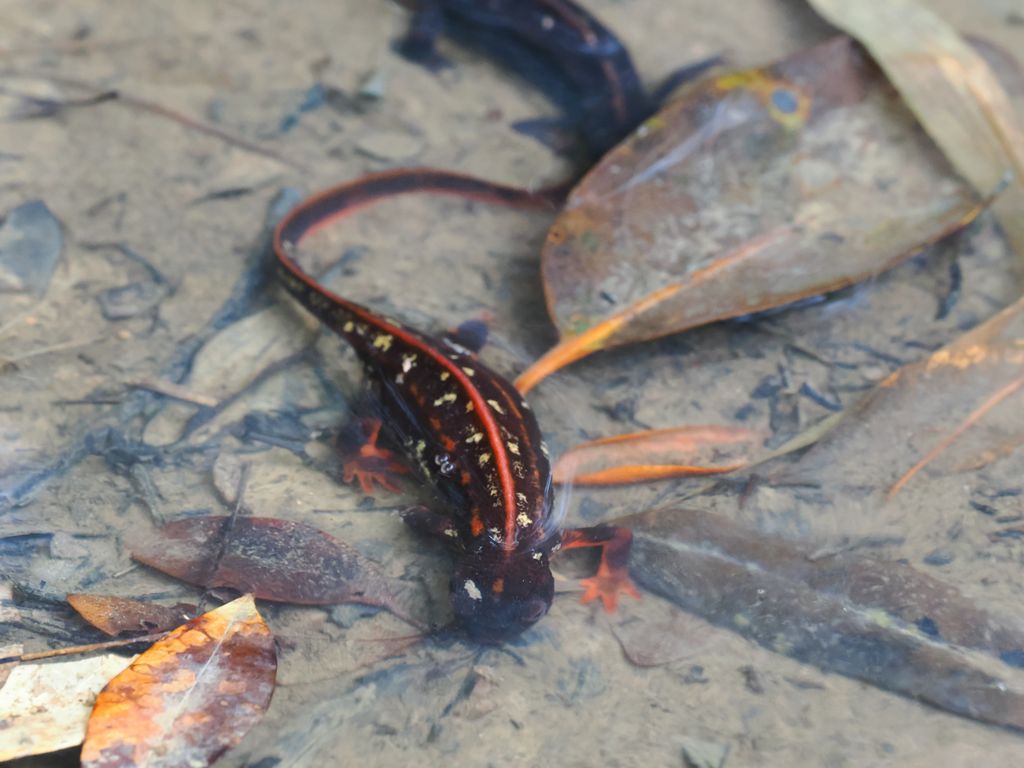
The species name Sword-tail newt ensicauda means sword (ensis) and tail (cauda). This species is divided into different subspecies between the Okinawa Islands and the Amami Islands. Interestingly, Tokunoshima, which lies between the Okinawa Islands and Amami Oshima, does not have Sword-tail newt:
- Amami Sword-tail newt アマミシリケンイモリ Cynops ensicauda ensicauda
- Okinawa Sword-tail newt オキナワシリケンイモリ Cynops ensicauda popei
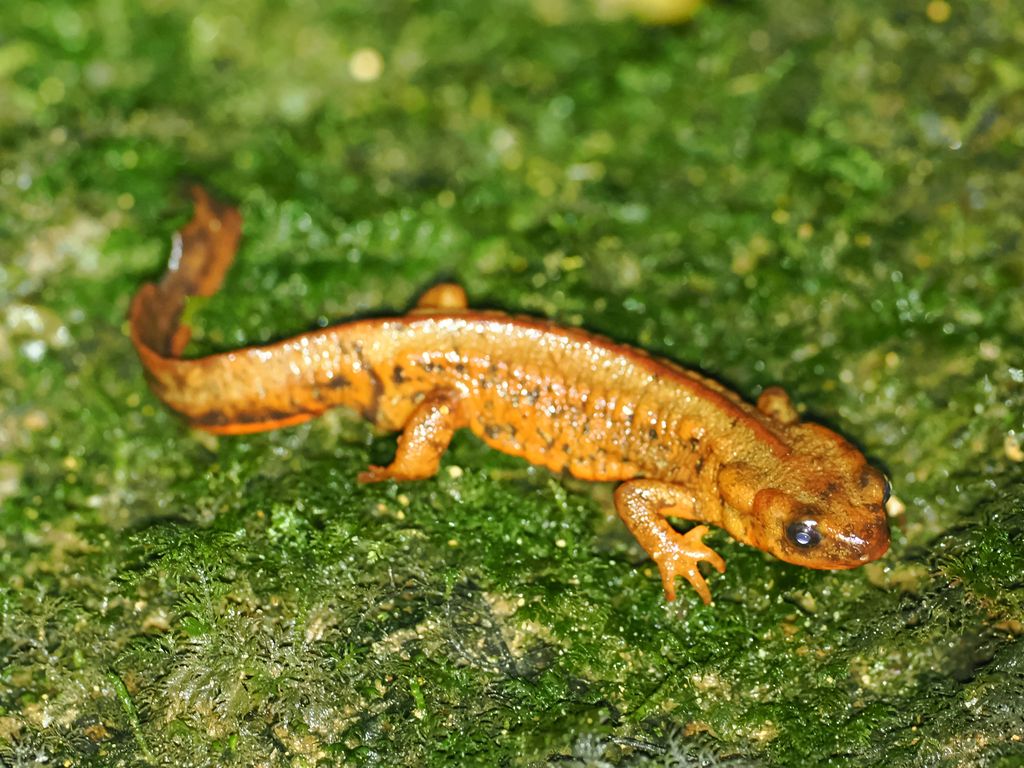
Sword-tail newt is commonly seen in stagnant or slow-flowing shallow water pools, but it can also move on land. They frequently crawl onto road surfaces after rain, making them prone to roadkill. Sword-tail newt breeds in winter. During the breeding season, the male’s cloaca enlarges and males perform an S-shaped tail waving to attract females. After the female absorbs the male’s spermatophore, she lays eggs between the leaves of aquatic plants.
Okinawa Sword-tail newt (Cynops ensicauda popei):
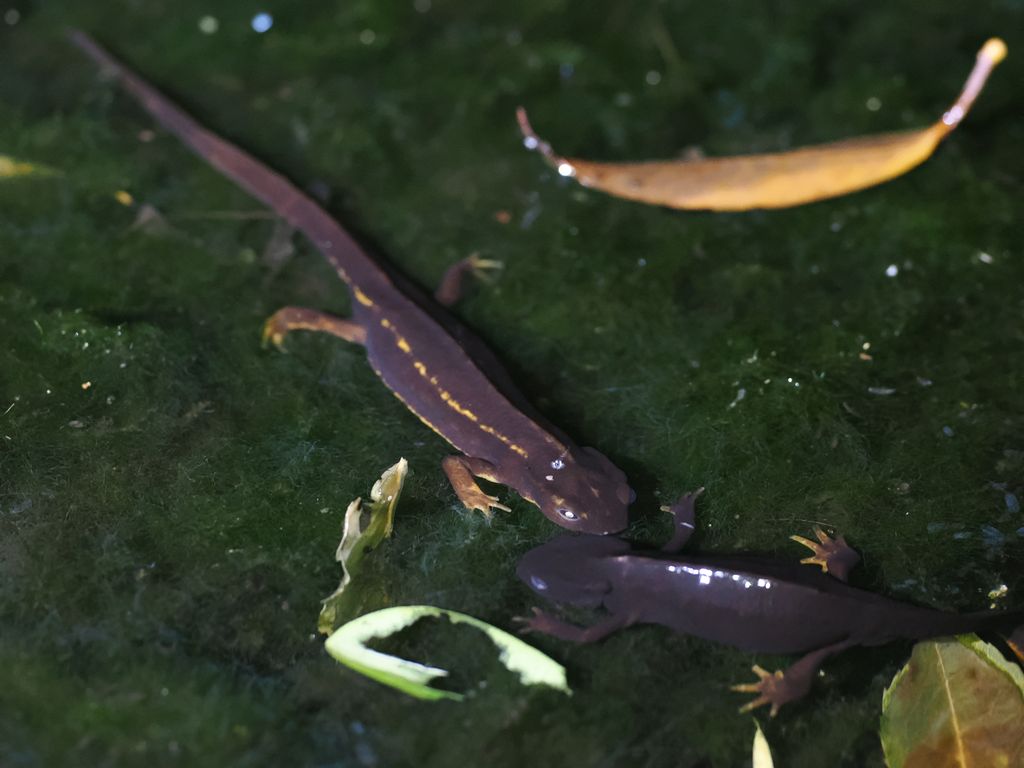
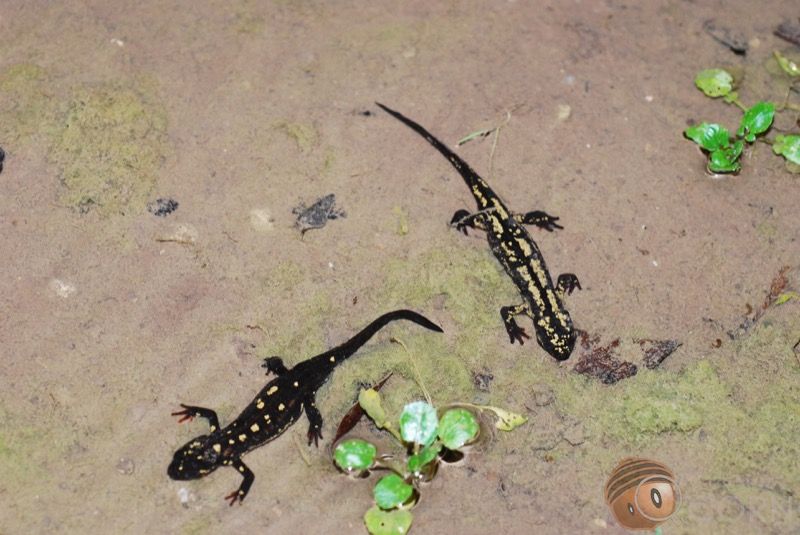
The Okinawa Sword-tail newt is found on Akajima, Okinawajima, Gerumajima, Sesokojima, Tokashikijima, Tonakijima, and Hamahigajima. Besides the unpatterned black individuals, about 70% have some yellow spots (gold flecks), a higher proportion than the Amami subspecies.
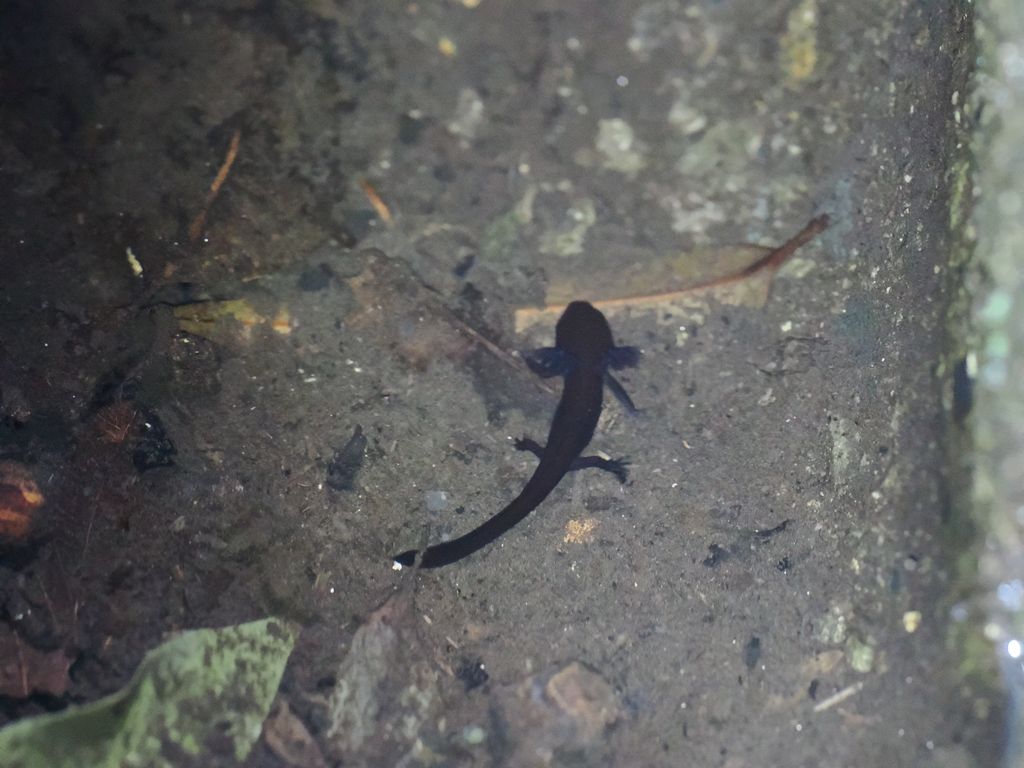
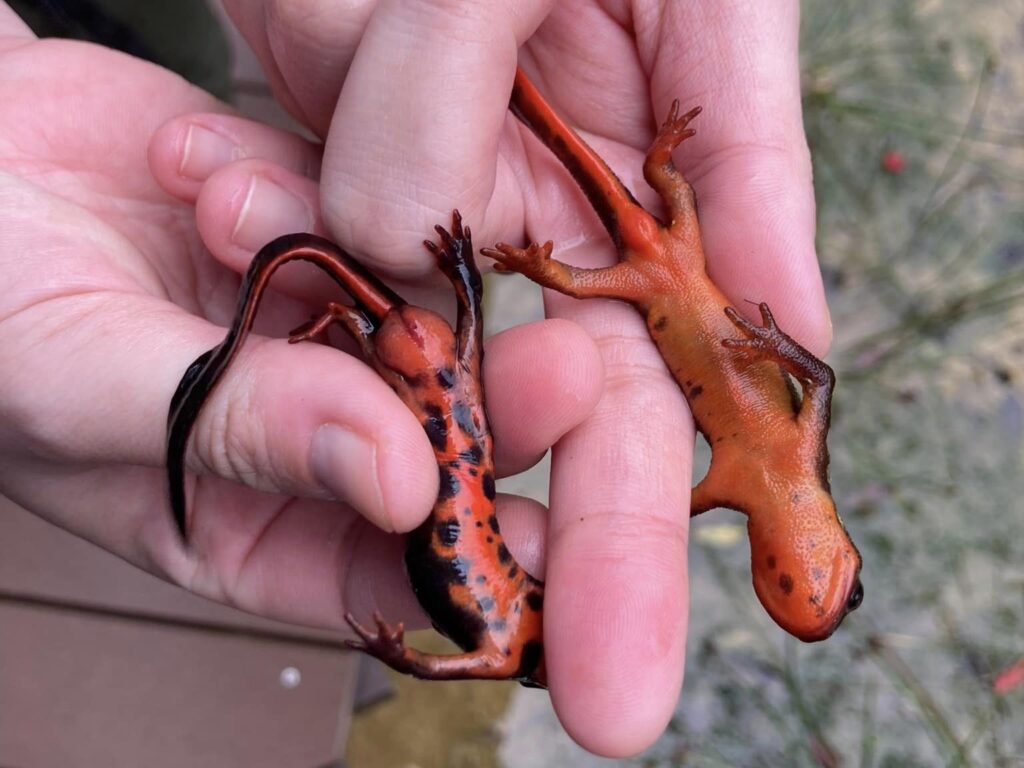
Field Photographs Taken During Our Tours, With Observation Dates
We often see this species during nighttime 【Herping】, just after rain during 【Morning Birding】, and on 【Forest Walk】 tours in high humidity environments.
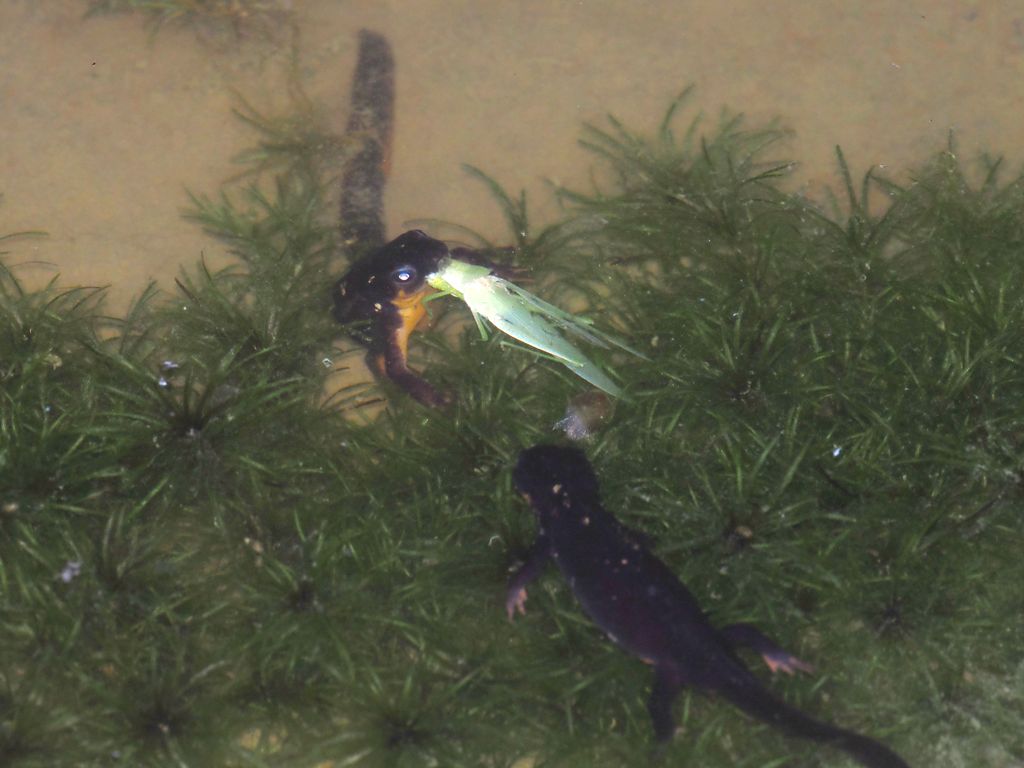
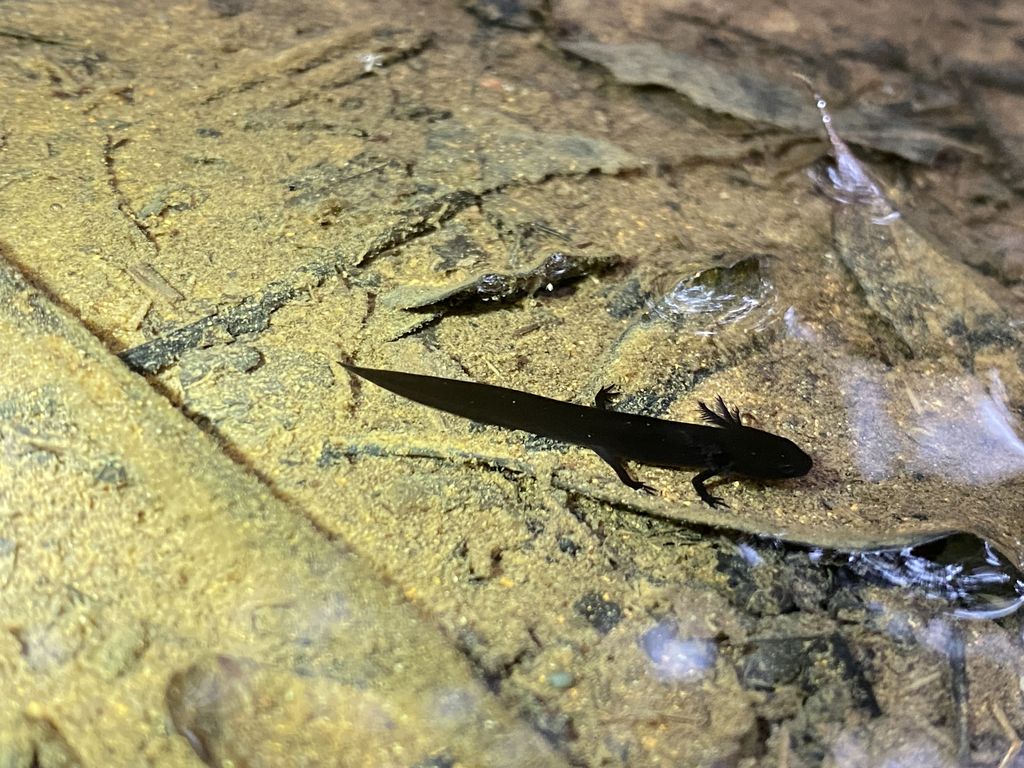
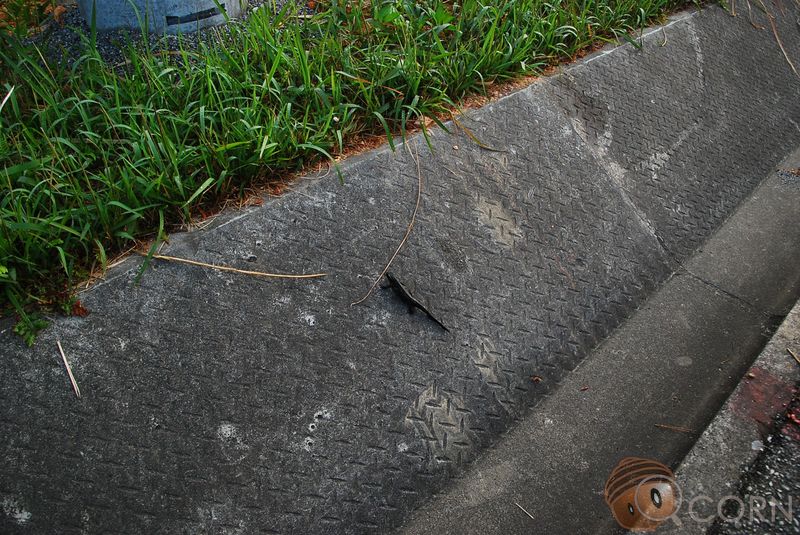
Field Videos Recorded During Our Tours
Male S-shaped tail waving courtship
Okinawa Sword-tail newt eating the eggs of Okinawa tree frog
Okinawa Sword-tail newt laying eggs among aquatic plants
Okinawa Sword-tail newt stealing tadpoles caught by a water scorpion
Amami Sword-tail newt (Cynops ensicauda ensicauda):
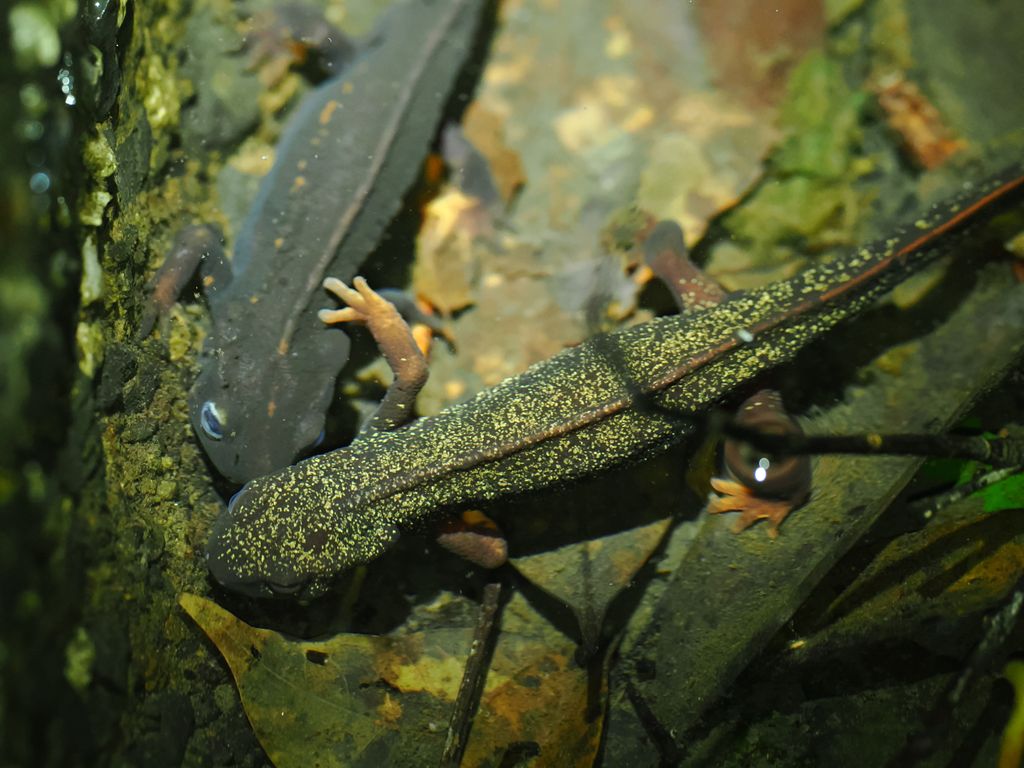
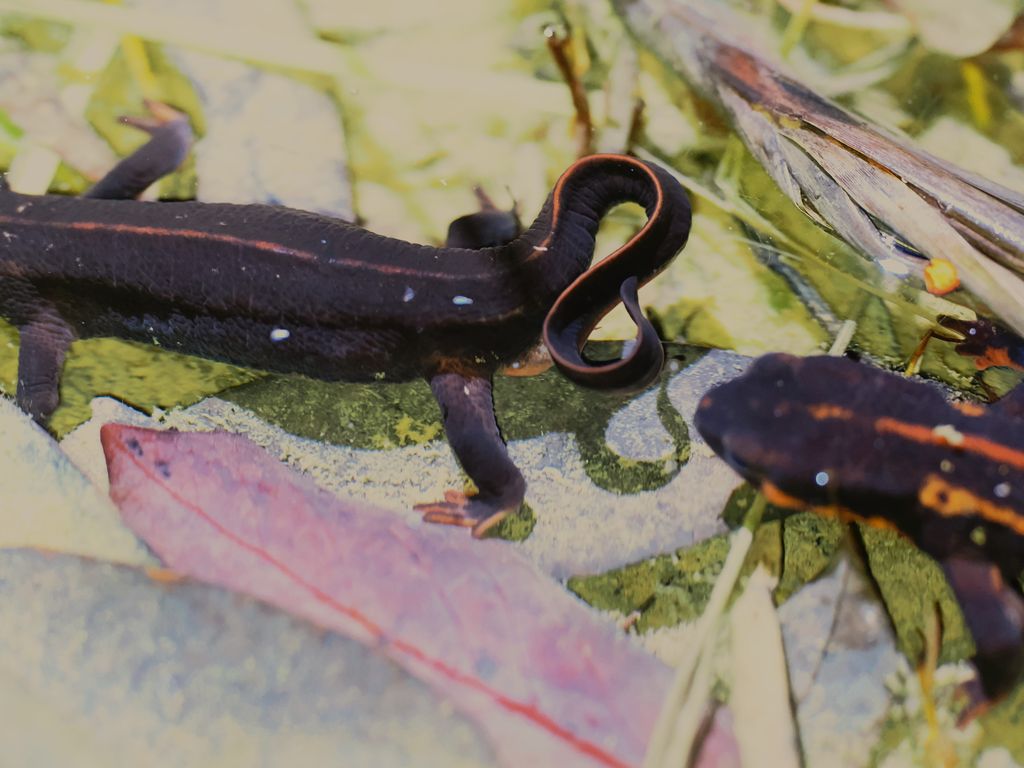
The Amami Sword-tail newt is found on Amami Oshima, Kikaijima, kakeromajima, and Yoronto. Their color is mostly uniform, sometimes with orange longitudinal lines or a few gold specks, which are finer than those on the Okinawa subspecies, resembling gold dust. Compared to the Okinawa subspecies, the dorsal line of the Amami Sword-tail newt is more pronounced.
Field Photographs Taken During Our Tours, With Observation Dates