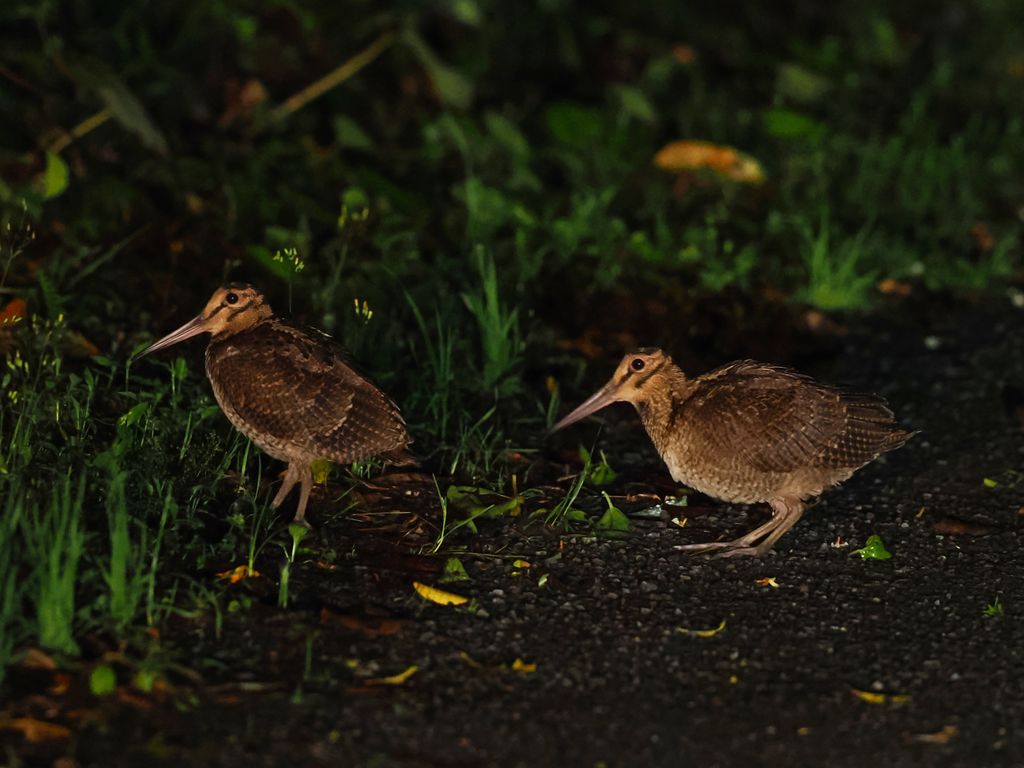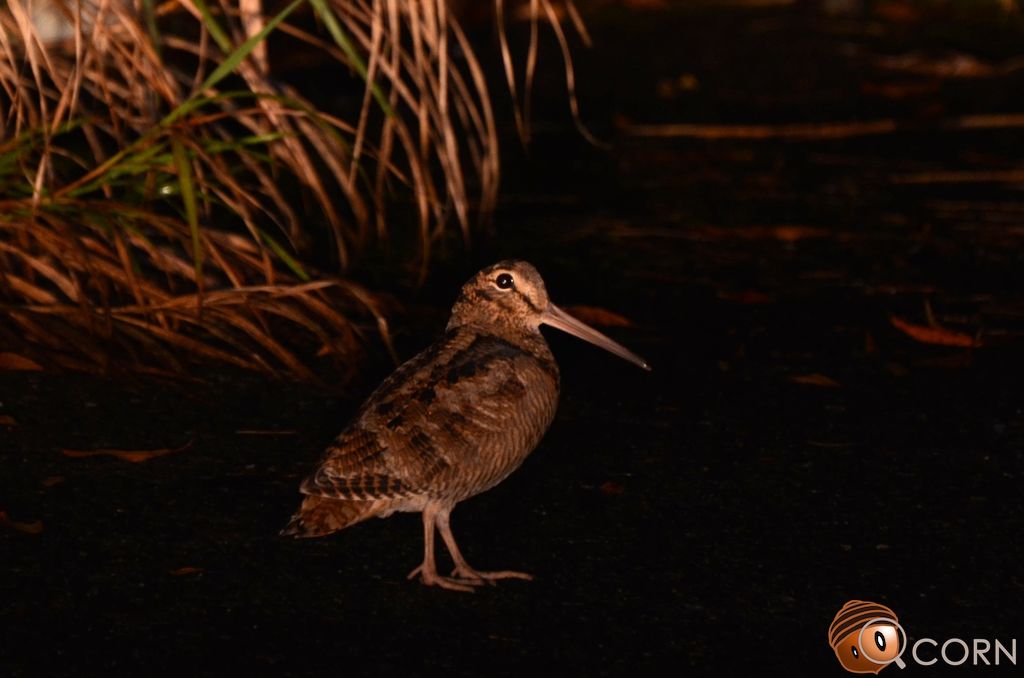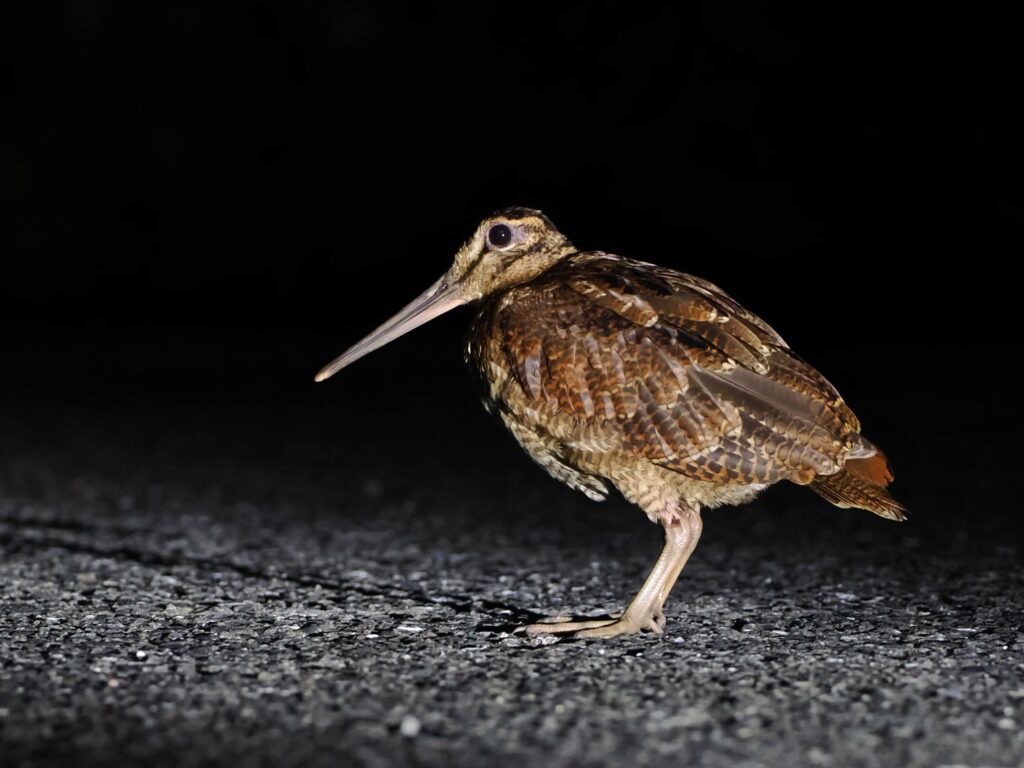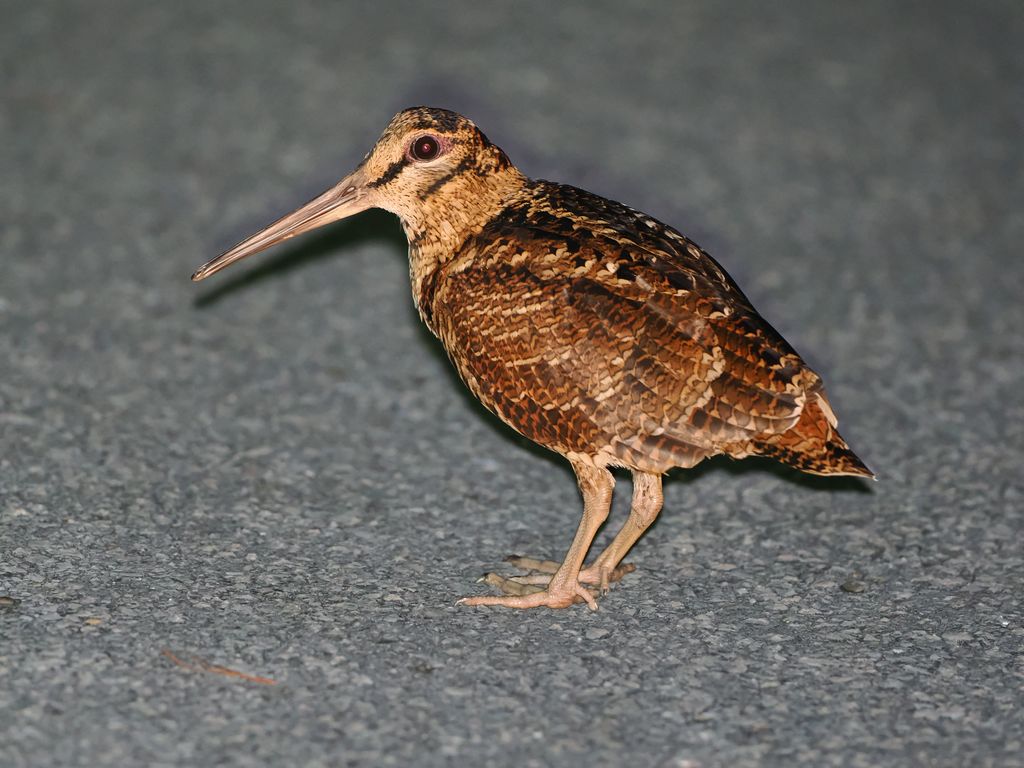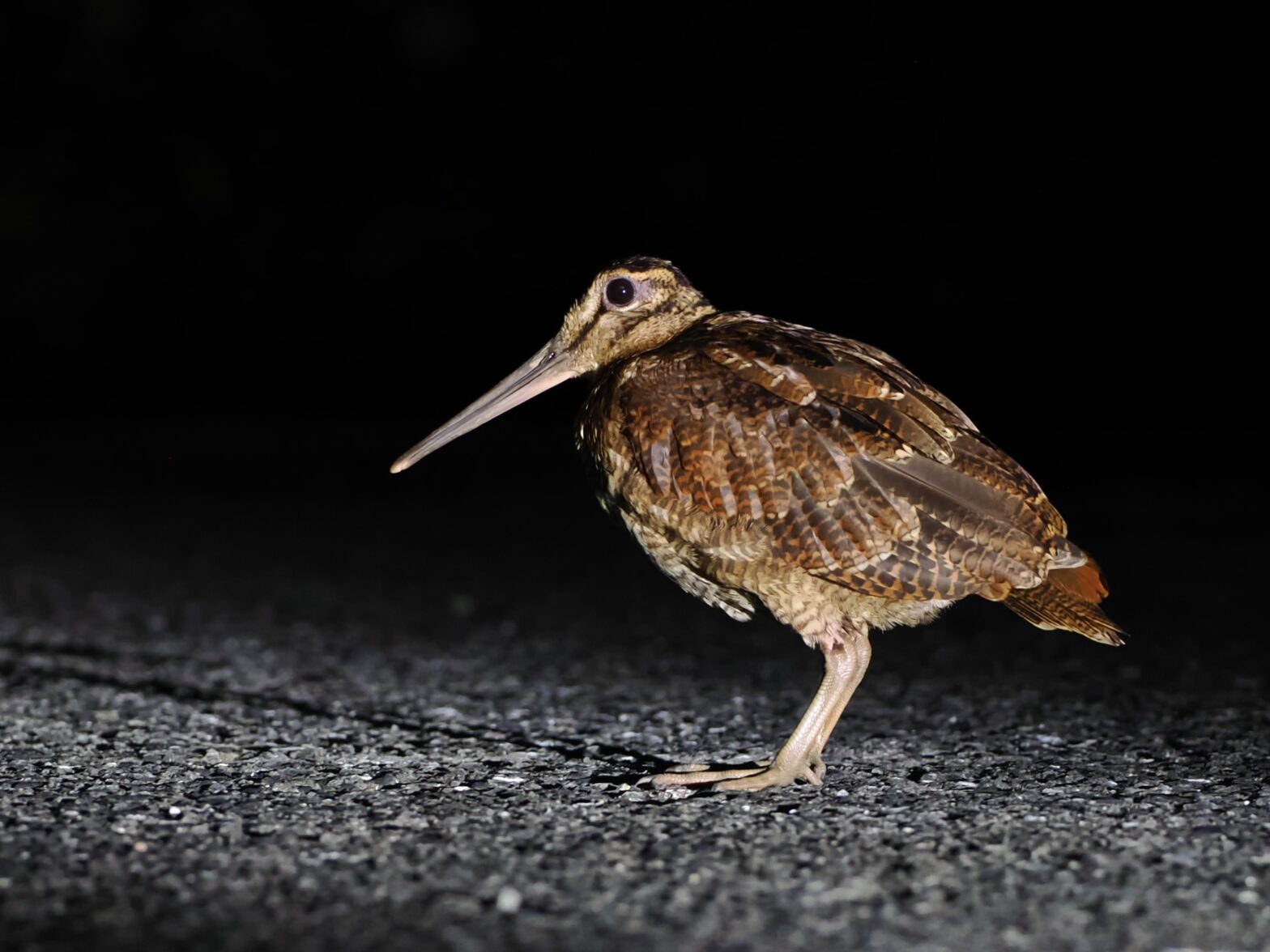
Species information
Scientific name: Scolopax mira
Japanese name: アマミヤマシギ
Chinese name: 奄美山鷸
English name: Amami woodcock
Origin: The main breeding grounds are Amami Oshima, Kikaijima, and Tokunoshima in the Amami Islands, while it is a winter visitor to Okinawajima.
Ecology and description
Woodcock species are nocturnal birds. The Amami woodcock is a resident bird of the Amami Islands and can be seen throughout the year on Amami Oshima and Tokunoshima. Occasionally, a few Amami woodcocks have been found on Okinawajima. However, these birds seem not suited for long-distance flights, and no breeding activity has been observed on Okinawajima. The origin of the Amami woodcocks on Okinawajima remained a mystery until January 2023, when three individuals were captured in Kunigami and Ogimi and fitted with GPS trackers. One of these birds reached Amami Oshima in March, providing the first evidence of Amami woodcocks flying back and forth between Amami Oshima and Okinawajima.
Reference: Amami Woodcock’s Sea Crossing Confirmed for the First Time
During the winter on Okinawajima, common Eurasian Woodcock (Scolopax rusticola) may also arrive by sea, creating a challenge to distinguish between these two species. See the image below for guidance (source: Tokunoshima Isen Town Museum).
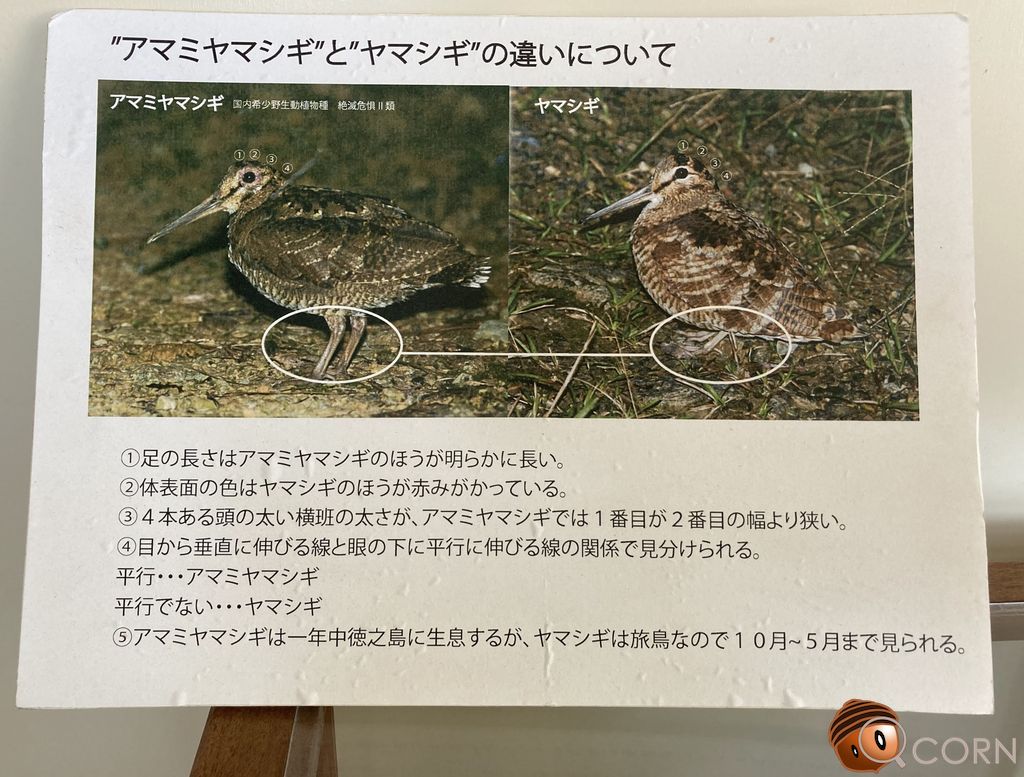
- The legs of the Amami woodcock are longer than those of Eurasian Woodcock.
- Eurasian Woodcock’s plumage is redder.
- There are four horizontal stripes on the head; the gap between the 1st and 2nd stripes is narrower for the Amami woodcock.
- Consider if the black line over the eye is parallel to the one below. Parallel: Amami woodcock, Not parallel: Eurasian Woodcock.
- The Amami woodcock can be seen year-round on Tokunoshima, but Eurasian Woodcock is only observed from October to May (using seasons to differentiate is only feasible in the Amami Islands where the Amami woodcock breeds).
Another distinction not shown in the image above is that Eurasian Woodcock’s eyes are higher, while the Amami woodcock has lower-set eyes (approximately along the line of the beak).
Eurasian Woodcock will fly away quickly if exposed to a flashlight. If you don’t capture a photo during the Okinawajima winter, it’s challenging to discern if it’s Eurasian Woodcock or the Amami woodcock.
Field photographs taken during our tours, with observation dates
During our winter season tours, such as 【Night Birding】 and 【Herping】, Amami woodcocks can be encountered, although they are more commonly observed on Tokunoshima and Amami Oshima.