Species information
Scientific name: Limnonectes namiyei
Japanese name: ナミエガエル
Chinese name: 波江大頭蛙, 波江蛙
English name: Namie’s frog
Origin: Endemic to northern Okinawajima
Ecology and description
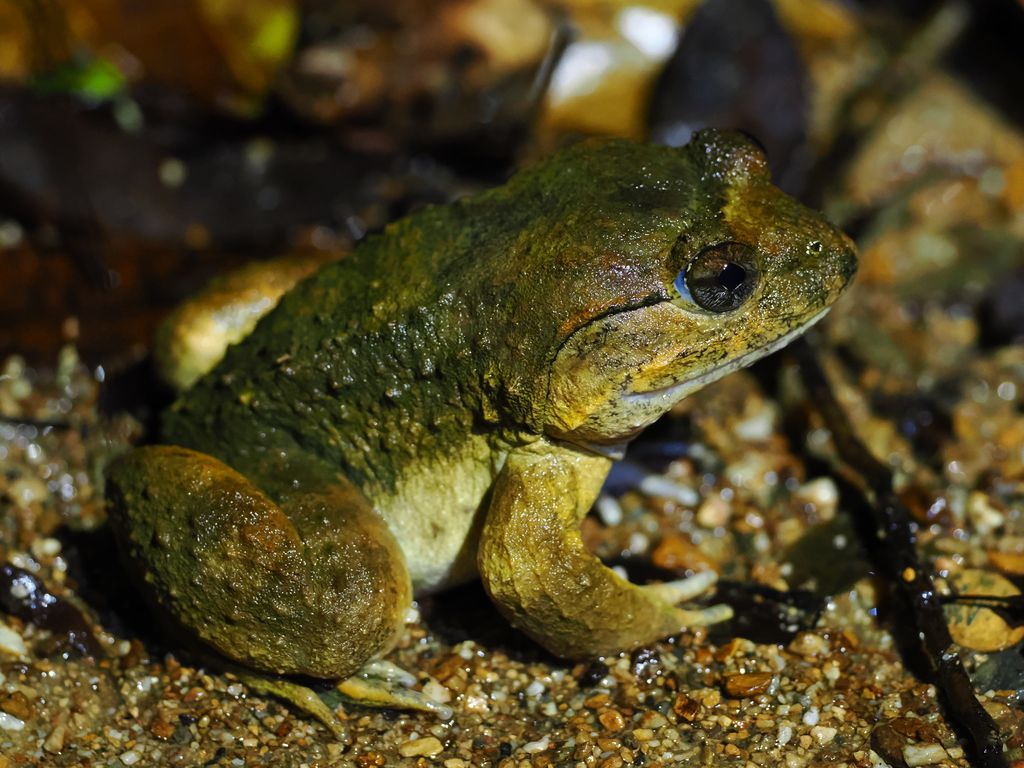
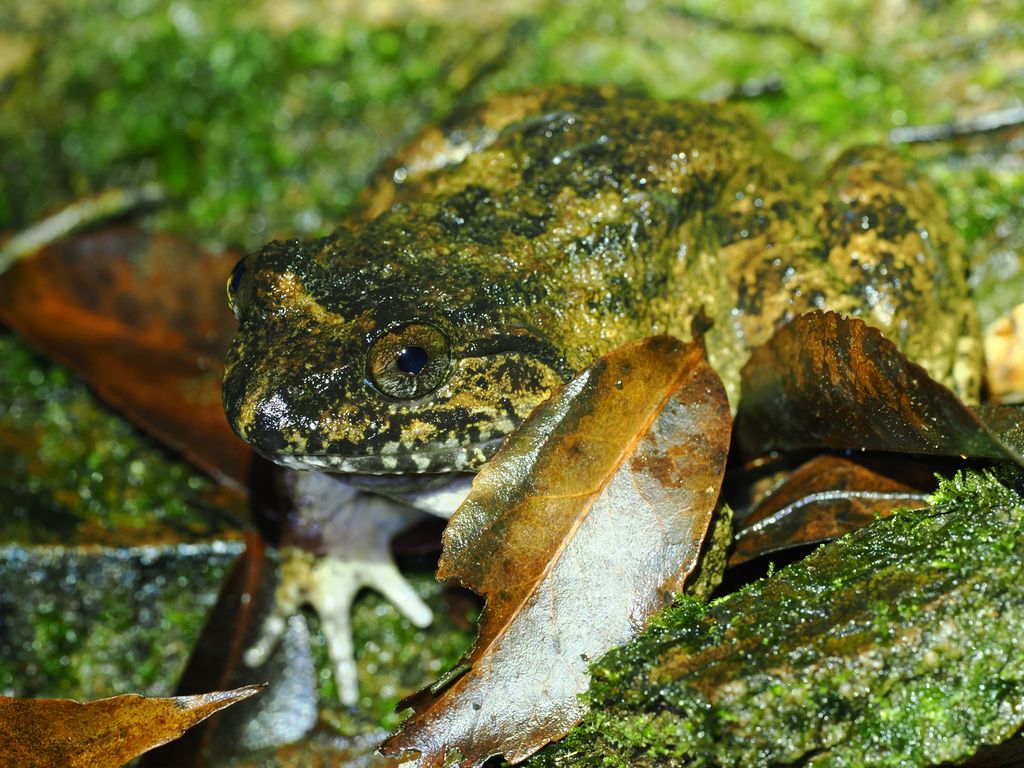
Namie’s frog inhabits the upper reaches of mountain streams and breeds during the summer. It is characterized by its large head and belongs to the same genus as the Fujian large-headed frog (L. fujianensis) found in Taiwan. Due to a cross-shaped pattern on the iris, its pupils appear diamond-shaped. Adults can grow to 8–12 cm in length. While there is little difference in size between males and females, males develop a prominent swelling on the back of the head.
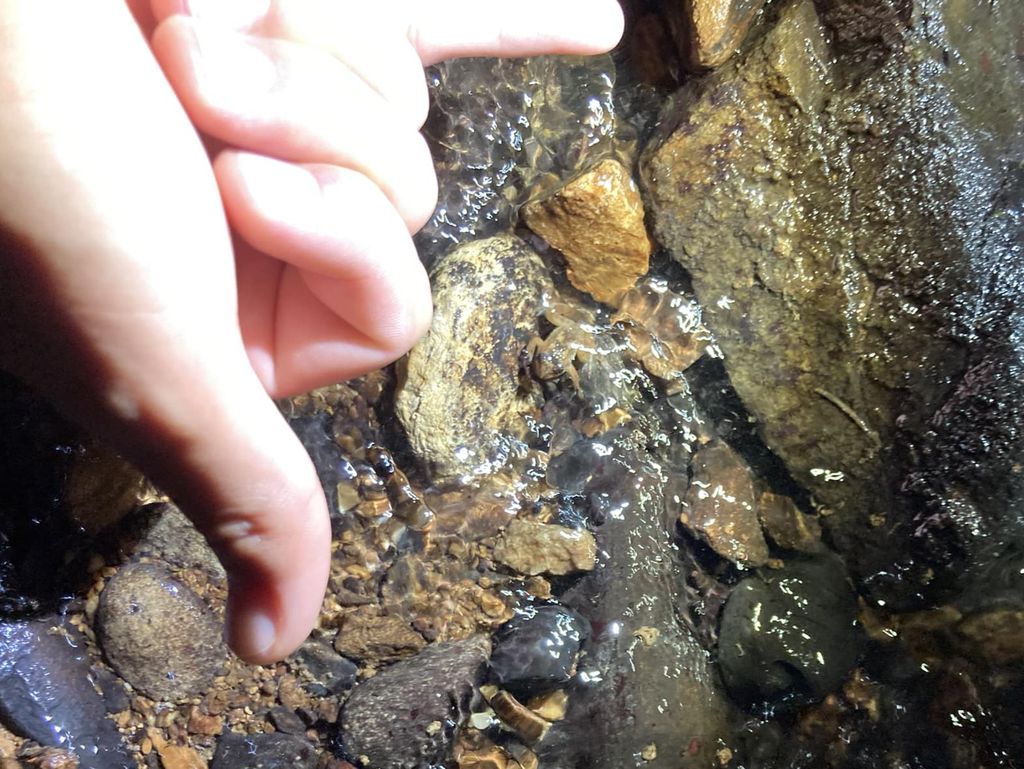
Field photographs taken during our tours, with observation dates
During the 【Herping】 tour along the stream trails, this species has been observed throughout different seasons, with a notably higher number of individuals seen particularly during the summer and autumn.
About Namie
The species is named after the Japanese zoologist Motoyoshi Namie (1854–1918).
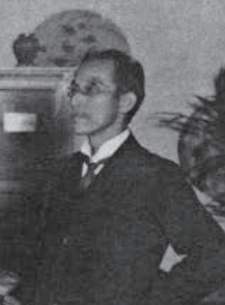
Screenshot from the Journal of the Ornithological Society of Japan
Motoyoshi Namie began working at the Tokyo Museum (now the National Museum of Nature and Science) in 1876 and was one of the founding members of the Tokyo Biological Society established in 1878. From 1877 to 1886, he traveled across Japan collecting zoological specimens. In 1886, he visited Okinawa together with Professor Shozaburo Watase of the Imperial University of Tokyo.(Reference)
Namie specialized in the study of mammals. During his Okinawa visit, he received a specimen of the Ryukyu tree rat (Diplothrix legata) from Hisashi Kuroiwa, the first principal of the Kunigami Agricultural School. Namie identified it as a local variety of Mus bowersii, known from Yunnan, China, and described it in 1879 as Mus bowersii var. okinavensis. This is now considered a synonym of Diplothrix legata.
Although the original description was written in Japanese, it was considered valid due to its detailed content. However, the whereabouts of the type specimen remained unknown for a long time until it was rediscovered in 2015 at the National Museum of Nature and Science, where it was matched with the original publication’s illustration.(Reference)
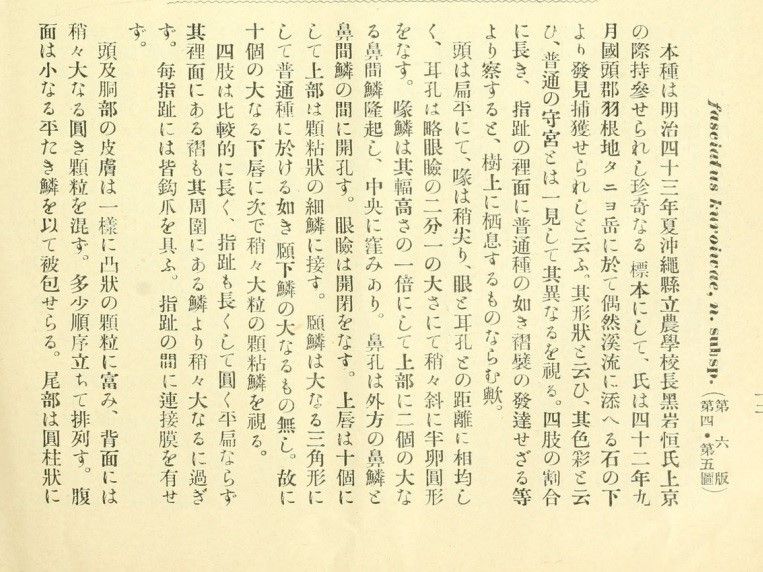
Namie also contributed to the taxonomy of reptiles and other taxa. For instance, he described a gecko that was later synonymized under Goniurosaurus kuroiwae, formerly known as Gymnodactylus albofasciatus kuroiwae Namiye.
The image below is from Namie’s 1912 paper “Geckos of Okinawa Prefecture,” which contains a detailed description of a specimen provided by Hisashi Kuroiwa. For the full article, see [Reference]。
Namie was also among the first Japanese scientists to publish on the fauna of Taiwan following the beginning of Japanese rule. In 1895, he authored a report titled “Fauna of the Empire’s New Territory Taiwan” (帝国新領地臺灣動物彙報), published in Dobutsugaku Zasshi (Zoological Magazine). [Reference]